How Many Solar Panels Do I Need in NZ? A 2026 Sizing Guide
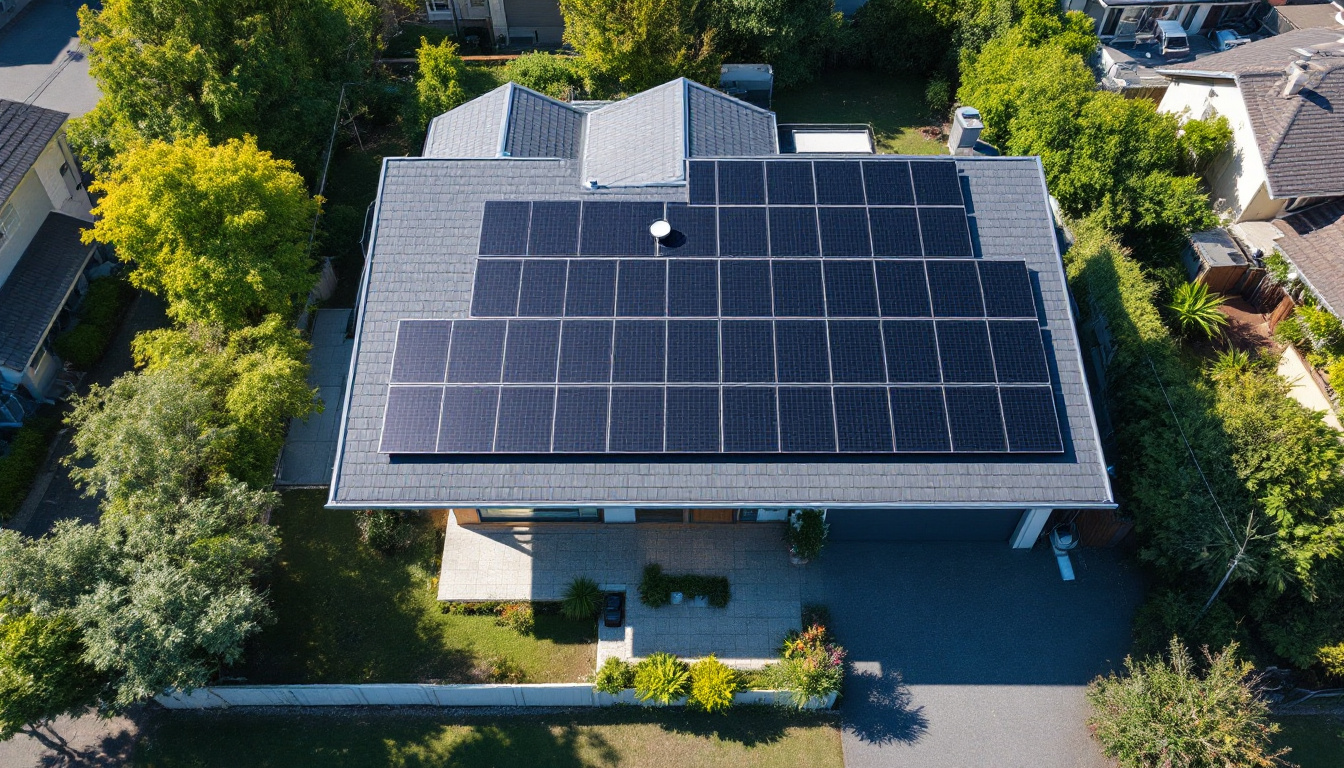
It is the first question almost every Kiwi homeowner asks: how many solar panels do I actually need? The short answer is that most New Zealand homes need somewhere between 11 and 17 panels, which builds a 5kW to 6.6kW system and covers the majority of an average power bill. Larger homes with an EV or a battery often go to 23 panels or more.
The exact number depends on how much power you use, your roof, and the wattage of the panels you install. This guide walks through how to work it out for your own home, with real figures from systems we install across Auckland.
The short answer, by system size
Panel count comes down to two things: the size of the system in kilowatts, and the wattage of each panel. Apollo Energy installs Trina Solar Vertex S+ panels rated at 420 to 440 watts, so a rough guide looks like this.
| System size | Panels needed | Annual output | Best suited to |
|---|---|---|---|
| 4kW | 9 to 11 panels | ~5,200 kWh | Small homes, one to two people |
| 5kW | 11 to 13 panels | ~6,500 kWh | Smaller homes, modest daytime use |
| 6.6kW | 15 to 17 panels | ~8,600 kWh | The most common size for an average NZ home |
| 8kW | 18 to 20 panels | ~10,400 kWh | Larger families, higher daytime use |
| 10kW | 23 to 27 panels | ~13,000 kWh | Large homes with an EV or battery |
These are planning estimates for Auckland conditions. Your real figure depends on roof orientation, shading, and how much power you use during the day. The fastest way to get a number tailored to your property is our free solar calculator, which takes about 60 seconds.
What actually decides how many panels you need
Four factors do most of the work.
Your power usage. A typical NZ home uses between 7,000 and 9,000 kWh a year. The more you use, the more generation you need to offset it.
When you use power. Solar is most valuable when you use it as it is generated. A household that runs appliances, a heat pump, or an EV charger during daylight hours gets far more value per panel than one that is empty until 6pm.
Your roof. A north-facing roof with little shading produces the most, so you need fewer panels for the same result. East and west roofs still work well but generate a little less, and heavy shading changes the layout.
Panel wattage. Higher wattage panels produce more from the same roof area, so you fit more capacity into less space. This is where panel quality genuinely changes the count.
How to work it out from your power bill
You can get a solid estimate in three steps.
Find your annual usage. Add up a year of power bills, or take a typical month and multiply by 12. Most homes land between 7,000 and 9,000 kWh.
Decide how much you want to offset. A 6.6kW system generates around 8,600 kWh a year, which covers most of an average home and cuts the bill by roughly 70 percent. You rarely need to match 100 percent of usage, because some power is used at night when panels are not generating.
Convert to panels. Divide the system size by the panel wattage. A 6.6kW system using 440W panels needs about 15 panels. A 10kW system needs around 23.
For a deeper look at what a mid-sized system produces day to day, see our guide on how much power a 5kW solar system produces.
Want the panel count for your own roof rather than an average? Request a free sizing assessment and we will work it out from your power bills, your usable roof area and the panel wattage we would actually install.
Why panel wattage changes the count
Not all panels are equal. Apollo Energy installs Trina Solar panels exclusively. Trina is a Tier 1 manufacturer with a Bloomberg rating, reaches up to 22.5 percent cell efficiency, and backs each panel with a 25 year performance warranty. Higher efficiency means each panel converts more of the sunlight that hits it into usable power.
In practice, a higher wattage panel lets you reach your target system size with fewer panels and less roof space. That matters on compact Auckland roofs, where fitting a full system can be the difference between a 6.6kW and an 8kW setup. You can read more about panel quality and efficiency in our guide to choosing solar panels in NZ.
Worked examples for real NZ homes
Here is how the numbers play out for three common households.
Small home, 4kW, about 9 panels. Generates around 5,200 kWh a year, cuts the power bill by roughly 55 percent, and saves in the region of $1,500 a year.
Average home, 6.6kW, about 15 panels. This is the most common choice. It generates around 8,600 kWh a year, cuts the bill by about 70 percent, and saves in the region of $2,800 a year.
Large home with an EV, 10kW, about 23 to 27 panels. Generates around 13,000 kWh a year, ideal for high daytime use and pairing with a battery.
Actual savings vary with your roof, your usage pattern, and your power plan. A typical 6.6kW system pays for itself within about 4 to 6 years.
Do you have the roof space?
A modern 440W panel takes up roughly 2 square metres. So a 15 panel 6.6kW system needs about 30 square metres of usable roof, and a 23 panel 10kW system needs closer to 46 square metres. Chimneys, vents, skylights, and shaded sections reduce the usable area, which is one reason a site assessment matters. If roof space is tight, higher wattage panels help you fit more capacity into the same footprint.
Should you size up for a battery or EV?
If you are planning an EV or a home battery, it is worth sizing up now. Both increase your daytime and stored energy needs, and adding panels later can cost more than including them from the start. Many homeowners choose a slightly larger system that is battery ready, so they can add storage without redesigning the array. Our solar battery storage guide covers how battery size and panel count work together.
The easiest way to get your exact number
Rather than guess, let the tool do the maths. Our free solar calculator asks for your power bill, property type, roof direction, and daytime usage, then returns a recommended system size and panel count within 24 hours. You can also read our guide on getting the most from a solar calculator before you start.
Prefer to talk it through? Call Apollo Energy on 0800 288 333 for a free assessment, or explore our residential solar options to see what a full system includes.
Frequently asked questions
How many solar panels do I need for an average NZ home?
Most average New Zealand homes need 15 to 17 panels, which builds a 6.6kW system. That generates around 8,600 kWh a year and covers roughly 70 percent of a typical power bill. Smaller homes often do well with 11 to 13 panels.
How many solar panels do I need to run a house completely?
Fully offsetting a home usually takes a larger system of 8kW to 10kW, or 18 to 27 panels, often paired with a battery so stored solar power covers the evening. Most homeowners aim to offset the majority of their bill rather than every kilowatt hour, because power used at night comes from stored energy or the grid.
How much roof space do solar panels need?
Each 440W panel takes up around 2 square metres. A 15 panel 6.6kW system needs about 30 square metres of usable roof, while a 23 panel 10kW system needs closer to 46 square metres. Shading, vents, and skylights reduce the usable area.
How many solar panels do I need for a 5kW system?
A 5kW system needs about 11 to 13 panels using 420 to 440W panels. It generates roughly 6,500 kWh a year, which suits smaller homes or households with modest daytime power use.
Does panel wattage change how many panels I need?
Yes. Higher wattage panels produce more from the same roof area, so you reach your target system size with fewer panels. Apollo Energy installs Trina Solar panels rated at 420 to 440W with up to 22.5 percent cell efficiency, which helps fit more capacity onto compact roofs.
How do I get an exact panel count for my home?
Use the free Apollo Energy solar calculator, which factors in your power bill, roof direction, shading, and daytime usage to recommend a system size and panel count. For a confirmed figure, a site assessment checks your roof and switchboard. Call 0800 288 333 to book one.
To have your exact panel count confirmed on site, request a free quote or call Apollo Energy on 0800 288 333.