Is Commercial Solar Worth It in NZ? Payback and ROI by Business Type (2026)
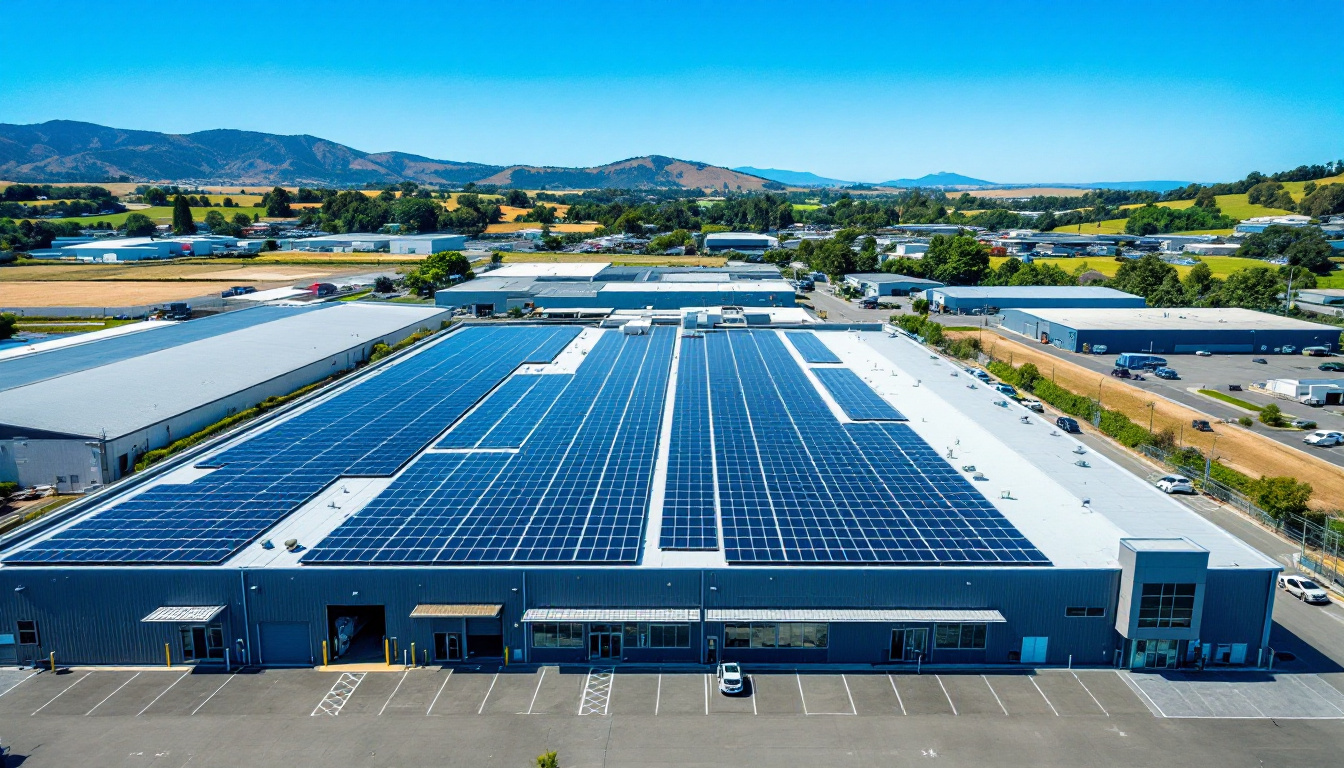
Commercial power bills in New Zealand have climbed sharply, with grid rates now sitting roughly between $0.25 and $0.45 per kWh and electricity prices rising over 30% in the past five years. For many operators, energy has moved from a background overhead to a line item worth managing closely. That pressure is exactly why more businesses are asking a simple question: is commercial solar actually worth it for us?
The honest answer is that it depends on how and when your business uses power. For sites that run real load during daylight hours, solar can offset a large share of the bill, with many commercial systems delivering savings in the range of 50 to 70%. As a working example, a business spending $5,000 a month on power can save roughly $35,000 to $42,000 a year. Payback periods for commercial solar in New Zealand typically land somewhere between 4 and 8 years, after which the generated power is largely yours to use.
This article looks at the decision and the numbers by business type, walks through a worked example, and explains financing and the install process. If you already want a tailored picture for your own roof and load, you can request a commercial assessment and Apollo Energy will model the figures against your actual consumption.
How commercial solar payback actually works
The single biggest driver of commercial solar payback is daytime self-consumption. When your panels generate power and your business uses it on the spot, you avoid buying that same energy from the grid at full retail rate. Every kilowatt hour you self-consume is worth far more than a kilowatt hour you export, because export buy-back rates are usually a fraction of what you pay to import. So the question that matters most is not how big your roof is, it is how much of your daytime generation you can soak up on site.
This is why your demand profile matters more than roof size. A large warehouse with a vast roof but very little daytime load will export much of what it generates and see a slower return. A smaller site that runs machinery, pumps, chillers, or compressors through the working day can self-consume most of its generation and reach payback sooner. Matching array size to your load curve, rather than simply filling the roof, is where a good design earns its keep.
The full cost and ROI breakdown, including how to size a system and how to choose an installer, is covered in depth in our pillar guide on commercial solar costs, ROI and how to choose the right system for your business. The aim here is complementary: to help you judge whether the numbers stack up for your particular type of operation.
ROI by business type
Different sectors have very different load shapes, and that shape largely decides how strong the payback will be. Businesses that run their heaviest loads while the sun is up tend to see the strongest returns, because they self-consume more of what they generate. The table below groups common commercial categories by their typical demand profile and solar fit.
| Business type | Typical demand profile | Solar fit | Why |
|---|---|---|---|
| Warehousing and logistics | Moderate daytime load, large flat roof, lighting and forklift charging | Good, with the right sizing | Big roofs suit large arrays, though payback is best when daytime load matches generation rather than exporting a surplus |
| Manufacturing | Heavy, steady daytime load from machinery and process equipment | Strong | High self-consumption through the working day means most generation offsets full retail import rates |
| Cold storage and refrigeration | Continuous load that often peaks in warmer daylight hours | Strong | Cooling demand tracks sunshine, so solar output and refrigeration load line up well for high self-consumption |
| Retail | Daytime trading hours, lighting, displays and air conditioning | Good | Opening hours overlap with peak generation, so a well sized array covers a useful share of the daily bill |
| Offices | Daytime load from lighting, computing and climate control | Good | Standard business hours align with generation, and consistent weekday demand supports steady self-consumption |
| Agriculture and horticulture | Irrigation pumps, packhouse and shed loads, often daytime heavy | Strong on the right site | Pumping and processing during daylight can absorb most generation, and many rural sites have ample roof or ground area |
As a rule of thumb, the more your business runs during daylight, the better the payback. Operations that shift most of their load to evenings or overnight will see a weaker return from solar alone and may want to consider how solar batteries could shift some daytime generation into later use. For more on the wider trend, our post on why more NZ businesses are switching to commercial solar panels covers the drivers in detail.
A worked example: putting numbers on the payback window
Take a business spending $5,000 a month on electricity, which works out to about $60,000 a year. Based on the savings Apollo Energy sees on commercial sites, a well matched system could reduce that bill by roughly $35,000 to $42,000 a year, which lands in that 50 to 70% range for a site with healthy daytime self-consumption.
To turn that into a payback window without inventing install prices, work backwards from the canonical range. Commercial solar in New Zealand typically pays back in about 4 to 8 years. Applied to annual savings of $35,000 to $42,000, that implies a system investment somewhere in the broad region of a few hundred thousand dollars, with the exact figure depending on system size, roof complexity, switchboard work and the components specified. The key point is that once the system is paid off, the generated power keeps offsetting bills for many years beyond that, since Trina panels carry a 25-year product and performance warranty.
Two sites with the same bill can have different payback windows, because the one that self-consumes more of its generation captures more value per kilowatt hour. That is why a proper assessment models your actual load rather than relying on the bill total alone. You can see how the costs and returns are built up in the commercial solar costs and ROI guide, then ask us to run the same maths against your meter data.
Want payback modelled on your own consumption rather than a business type average? Request a commercial assessment and we will build the figures from your load profile and your current tariff.
Financing and cashflow: how businesses fund solar
There are broadly two ways to fund a commercial solar system, and the right choice depends on your cashflow and how you account for capital projects.
- Paying upfront. Buying the system outright means the savings flow straight to your bottom line from day one, and the payback clock starts immediately. For businesses with available capital, this tends to give the strongest long term return because there is no financing cost layered on top.
- Financing the system. Spreading the cost over time lets you preserve working capital and, in many cases, the energy savings can help offset the repayments. This keeps the project closer to cashflow neutral while you still capture the long term benefit once the finance is repaid.
Beyond the headline payback, many operators value solar as a hedge against price volatility. With grid rates having risen over 30% in five years, locking in a chunk of your own generation reduces exposure to future increases. The more rates climb, the more valuable that self generated power becomes, which is a different kind of return that a simple payback figure does not fully capture.
There can also be sustainability and reporting benefits. Many New Zealand businesses now report on emissions or face procurement requirements that favour lower carbon operations, and on site solar contributes directly to those goals. The financial treatment of a solar investment, including any tax or depreciation implications, varies by business and is best confirmed with your accountant or a qualified financial adviser. We focus on the energy modelling and let your professional advisers handle the tax position.
System scale: from rooftop arrays to larger sites
Commercial solar covers a wide span of sizes. A modest rooftop array on a retail unit or office sits at one end, while large industrial roofs and ground mounted sites sit at the other. Apollo Energy has 500kW or more of commercial capacity installed, including a real 130kW commercial project in East Tamaki, so the same design discipline scales from smaller rooftops up to substantial sites.
If you are weighing up a larger installation, our guide running from 100 kW to 20 MW across rooftops and solar farms walks through how scale changes the design and the economics. You can also browse completed installs on the projects page to see the range of work, from residential rooftops through to commercial arrays.
The Apollo Energy process, end to end
A commercial system is only as good as the design and install behind it, so Apollo Energy manages the project from first assessment through to ongoing monitoring.
- Site assessment. We review your roof or ground space, switchboard, and most importantly your consumption profile, so the system is sized to what you actually use during daylight rather than just what fits.
- Design. The array and inverter configuration are matched to your load curve to maximise self-consumption and shorten the payback window.
- Tier 1 components. Systems use Trina Solar panels, a Tier 1 brand with Bloomberg bankability and a 25-year product and performance warranty, paired with Growatt inverters rated up to 97.5% peak conversion efficiency and backed by a 10-year warranty.
- End to end project management. Installation is handled by licensed electricians, with the whole project coordinated so you have a single point of accountability.
- Monitoring. Growatt remote monitoring through the ShinePhone app gives 24/7 visibility of generation and performance, so you can confirm the system is delivering the savings the design promised.
Ready to find out if commercial solar is worth it for your business?
The surest way to know your real payback is to model it against your own consumption. Apollo Energy can run that assessment, size a system to your daytime load, and show you the numbers before you commit. Explore the full commercial solar service, then request a commercial assessment and we will build a tailored picture for your site.
Frequently Asked Questions
Is commercial solar worth it for every type of business?
Not equally. Businesses that run the most load during daylight hours, such as manufacturing, cold storage and many agricultural sites, tend to see the strongest payback because they self-consume more of what they generate. Operations that use most of their power in the evening see a weaker return from solar alone unless they add battery storage.
What payback period should a commercial solar system have in NZ?
Commercial solar in New Zealand typically pays back in about 4 to 8 years, depending on system size, your daytime self-consumption and the components specified. After payback, the system keeps offsetting bills for many years, with Trina panels carrying a 25-year product and performance warranty.
How much can a business save with commercial solar?
Many commercial systems deliver savings in the range of 50 to 70% on electricity. As an example, a business spending $5,000 a month on power can save roughly $35,000 to $42,000 a year, though the exact figure depends on how much daytime generation the site can self-consume.
Should I pay upfront or finance a commercial solar system?
Both work. Paying upfront sends the savings straight to your bottom line and starts the payback clock immediately. Financing preserves working capital and lets the energy savings help offset repayments. The right choice depends on your cashflow and how you account for capital projects, so it is worth discussing with your financial adviser.
Does roof size determine how good my return will be?
Not on its own. Your demand profile matters more than roof size, because the value comes from self-consuming generation rather than exporting it. A smaller site with heavy daytime load can pay back faster than a large roof with little daytime use, which is why a proper assessment models your actual consumption.
What components does Apollo Energy use for commercial systems?
Apollo Energy uses Tier 1 components only, with Trina Solar panels and Growatt inverters. Trina panels carry a 25-year product and performance warranty, Growatt inverters offer up to 97.5% peak conversion efficiency with a 10-year warranty, and Growatt remote monitoring gives 24/7 visibility of system performance.
For a payback model built on your own site data, request a commercial quote or call Apollo Energy on 0800 288 333.