How to Size a Solar System for an EV Household in NZ (2026 Checklist)
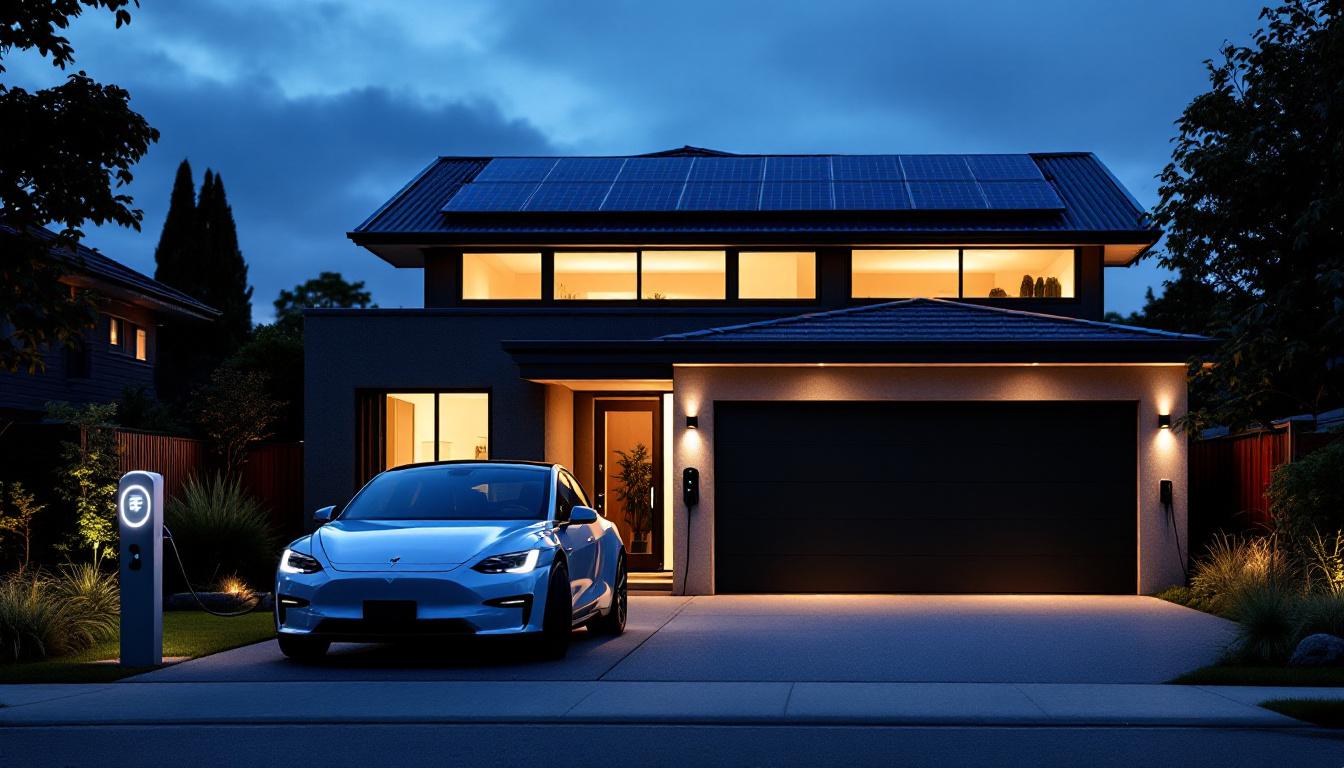
An electric vehicle adds 10 to 25 kWh per day to a typical NZ household's power demand. That is more than the average existing home solar system produces in a winter day, and it is the single biggest reason NZ solar buyers in 2026 are sizing their systems differently than they did 2 years ago.
If you are buying an EV and looking at solar (or already have solar and just bought an EV), the answer is almost never the same 5 kW or 6.6 kW system that worked for the previous generation of NZ homes. Sized wrong, the EV charges from grid every night and the solar system underdelivers on its payback. Sized right, the EV becomes the reason the solar system pays itself off two years faster.
This guide walks through the 7 step checklist Apollo Energy uses when designing solar for EV households in Auckland, North Shore and Christchurch. The steps are sequential; skipping any one of them is where most NZ EV solar mistakes happen.
Already know you need solar plus EV charging at home? Book a free design consultation with Apollo Energy. Bring your last 12 months of power bills and tell us which EV model you drive (or plan to buy) and we will model the system size that actually covers it.
Why EV charging changes the solar conversation
A pre EV NZ household typically uses 18 to 30 kWh per day, weighted heavily to mornings (heat pump, hot water) and evenings (cooking, lighting, dishwasher). A 6.6 kW solar system on a north facing Auckland roof produces 24 to 30 kWh per day on a clear day, with 35 to 45 percent typically self consumed.
Add an EV and the picture changes:
- EV adds 10 to 25 kWh per day depending on model and commute distance.
- Charging is concentrated either overnight (slow trickle) or in 2 to 3 hour windows.
- If the household commutes 5 days a week, EV demand is concentrated on workdays.
The combined load on a typical NZ EV household sits 30 to 55 kWh per day. A 6.6 kW system covers roughly 60 percent of that on a good day; on a Wellington winter day, less than 30 percent. The sizing answer depends entirely on how, when and how often you charge.
The same logic that we cover in our guide on why solar systems underperform applies in reverse here. Many "underperforming" systems in 2026 are actually correctly performing but were sized for a pre EV household. The system has not failed; the demand profile has changed.
Takeaway:
- EV adds 10 to 25 kWh per day to NZ household power demand.
- Combined household plus EV load lands 30 to 55 kWh per day for typical commuters.
- Existing 6.6 kW systems are usually undersized for EV households without adjustment.
Step 1: Work out your EV kWh demand
Real numbers, not advertised numbers. Find the kWh per 100 km figure for your EV (Tesla Model 3 sits around 15 kWh per 100 km in NZ conditions, the Polestar 2 closer to 18, the BYD Atto 3 around 16). Multiply by your weekly driving distance and divide by 7 to get daily demand.
Worked example for an Auckland commuter:
- 40 km round trip per workday, plus 100 km weekend driving = 300 km per week
- At 16 kWh per 100 km = 48 kWh per week
- Daily average = 6.9 kWh, but real charging is 12 to 16 kWh on 3 to 4 charge nights per week
Now do the same for a North Shore family with two EVs and longer commutes:
- EV 1: 70 km per day, 5 days = 350 km/week, around 56 kWh/week
- EV 2: 40 km per day, 5 days = 200 km/week, around 32 kWh/week
- Combined = 88 kWh/week, 12.6 kWh per day average
Takeaway:
- Use 15 to 18 kWh per 100 km as the realistic NZ EV consumption rate.
- Calculate per week, then per day; charging is rarely evenly distributed.
- Plan for the bigger driver in the household, not the average.
Step 2: Map when you actually charge
This is the step most NZ solar buyers skip, and it is the one that changes the system architecture most.
There are three common charging patterns in NZ:
- Overnight slow charging (most common). Plug in 6pm, unplug 7am. 11 hours of charging, drawing 2 to 3 kW continuously. This charges directly from the grid (or from a battery), not from live solar.
- Off peak overnight at lower tariff. Some retailers offer a midnight to 5am EV tariff at 12 to 18 cents per kWh. Also entirely grid (or battery) supplied; solar contributes nothing if you only charge then.
- Daytime charging from solar direct. Plug in 9am, charge through 3pm. Pulls 5 to 7 kW directly off the panels. Only works for households where the EV (or a second EV) is at home during work hours, or weekends.
If you only charge overnight, your solar system is helping your EV by exporting credit during the day and offsetting the grid power you draw at night. If you can charge in the day, every kWh the EV uses is a kWh you self consumed at 35 cents instead of exporting at 12 cents. The financial difference per year is significant: roughly NZD 800 to 1,500.
Takeaway:
- Overnight only charging needs battery or favourable tariff to capture solar value.
- Daytime charging captures the full per kWh saving and should be planned where possible.
- The charging pattern, not just the kW size, drives the system architecture.
Step 3: Add the rest of the household load
EV demand sits on top of household base load. NZ homes with heat pumps, heat pump hot water, ducted heating or a swimming pool can easily run 25 to 35 kWh per day before the EV even plugs in.
A quick base load checklist:
- Heat pump heating (winter): 8 to 18 kWh per day
- Heat pump hot water cylinder: 4 to 7 kWh per day
- Pool pump and heater: 6 to 14 kWh per day in summer
- Cooking, lighting, fridge, dishwasher, washing machine: 5 to 8 kWh per day
- Office and screens (work from home): 2 to 4 kWh per day
Add these to your EV demand from Step 1 and you have your real total daily kWh number. For most Auckland EV households this lands between 35 and 55 kWh per day.
Takeaway:
- Heat pump and hot water demand alone can double household kWh in winter.
- Always size to winter load, not summer; you can afford to export in summer.
- Pool households and large EV households need genuinely larger systems.
Want the sizing done on your own EV and charging routine? Book a free design consultation and bring 12 months of power bills plus the EV model you drive or plan to buy.
Step 4: Choose the right system kW size
NZ rule of thumb for sizing solar to match annual load:
- 1 kW of solar produces 1,300 to 1,500 kWh per year in Auckland (north facing)
- So 1 kW covers roughly 3.5 to 4 kWh per day on average across the year
Worked examples:
- EV household using 35 kWh per day: needs 9 to 10 kW to cover annual demand
- EV household using 45 kWh per day: needs 11 to 13 kW
- Two EV household using 55 kWh per day: needs 14 to 16 kW
This is where the historical "6.6 kW is the standard NZ size" advice falls apart for EV households. The right answer for most EV households is 10 kW and up. Our comparison of 5kW vs 10kW residential systems shows the cost step is much smaller than people assume.
If your roof cannot fit the kW you need, a solar carport or pergola on the driveway is the most common solution. Apollo can show you the production maths side by side.
Takeaway:
- EV households almost always need 10 kW or larger systems.
- Two EV households often need 14 to 16 kW.
- If the roof cannot fit, ground structures (carport, pergola) are the standard workaround.
Step 5: Pick the right inverter type
The inverter decision matters more for EV households because the load profile is spiky and time shifted. Three common options:
- String inverter (cheapest). Fine for a roof system with consistent aspect and no shading, but limits future battery upgrades and offers no panel level monitoring.
- Hybrid inverter (Apollo default for EV households). Includes battery interface built in, supports backup power, smart export control. Allows the battery to be added now or later without re wiring.
- Microinverters or DC optimisers. Panel level conversion; needed if shading is a real issue or if the array is split across multiple aspects.
For most EV households a hybrid inverter from Growatt or similar Tier 1 brand is the right call. It future proofs the battery decision and gives you the monitoring data you need to actually understand your EV charging behaviour. Browse our solar inverter range for the brands we deploy.
Takeaway:
- Hybrid inverters are the default for EV households because they future proof battery upgrades.
- String inverters save NZD 500 to 1,000 upfront but limit your options later.
- Panel level optimisers are only needed where shading or split aspect is a real constraint.
Step 6: Decide whether you need a battery
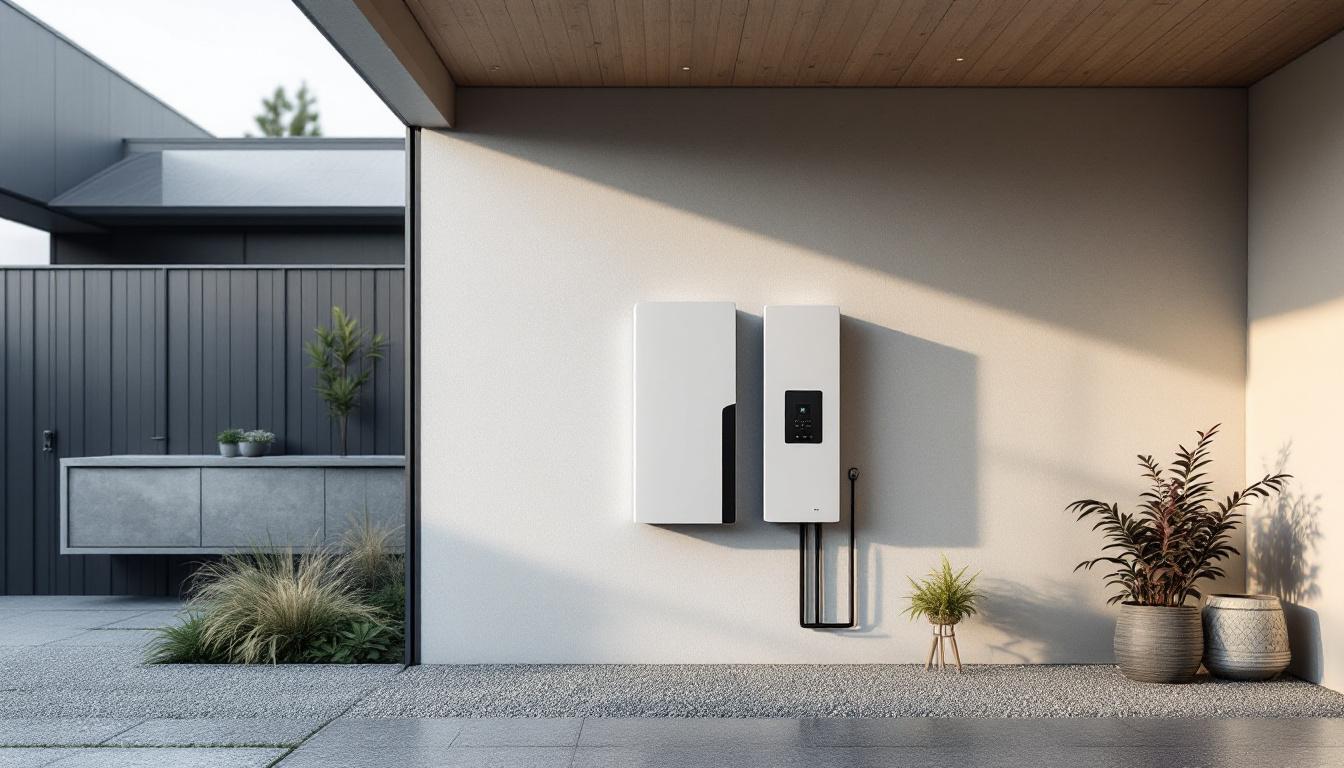
EV households are the strongest case in NZ for adding a home battery, because the charging pattern (concentrated, predictable, off solar hours) is exactly what a battery is designed to bridge.
A 10 kWh battery sized for an EV household typically:
- Stores 8 to 9 kWh of usable daily solar surplus
- Discharges into the EV charger during off solar hours
- Cuts grid imports by 4 to 6 kWh per day
- Saves NZD 600 to 900 per year on top of the solar alone
If you can charge the EV from solar directly during the day, the battery case weakens. If you can only charge overnight, the battery case is strong. Our solar battery storage guide for NZ in 2026 walks through the decision in detail with specific brand and chemistry comparisons. The full range we install is on our solar batteries page.
Takeaway:
- Overnight charging plus battery is the best financial combination for EV households.
- Daytime charging direct from solar can sometimes outperform battery storage on cost.
- Battery payback for EV households typically lands 5 to 7 years.
Step 7: Plan for the second EV in 2 to 3 years
Across Apollo's recent NZ installs, roughly half of single EV households end up adding a second EV within 3 years. If that is plausible for you, design the system today for the larger demand.
The cheapest way to handle this is to oversize the inverter and roof string capacity now, with room to add panels or a second EV charger later. Adding 2 to 3 kW of additional panels to an existing properly sized system is straightforward; replacing an undersized inverter with a larger one mid life is not. The cost difference between a 10 kW and 13 kW system at install time is usually NZD 4,000 to 6,000; the cost of upgrading after install is closer to NZD 8,000 to 12,000.
Use our solar calculator to model the difference between current and future load before you commit to a kW size.
Takeaway:
- Plan for the second EV at install time; retrofit is significantly more expensive.
- Oversize the inverter even if you do not need the full kW yet.
- The system can grow in panels over time; the inverter is the harder upgrade.
Common sizing mistakes EV households make
- Buying the same system as the neighbours. Their household had no EV, no heat pump, no pool. Yours might have all three.
- Using "average household" data. Your actual 12 month power bill is the only number that matters. The "average NZ home uses 8,000 kWh per year" stat is meaningless once you add an EV.
- Sizing only for current EV usage. If a second EV is coming, size for that now.
- Ignoring the charging window. Overnight charging needs a different system architecture than daytime charging.
- Skipping the inverter upgrade to save money. A NZD 800 saving today often costs NZD 5,000 to recover later.
Want a system sized for your actual EV charging behaviour, not a generic 6.6 kW? Book a free design consultation with Apollo Energy and we will model the system size against your real bills and EV usage pattern.
Frequently asked questions
What size solar system do I need for an NZ home with one EV?
Most single EV households need 9 to 12 kW depending on commute distance, heat pump load and whether daytime charging is possible. The traditional 6.6 kW NZ size is usually undersized once an EV is added. Use real consumption data, not averages.
Can I charge my EV directly from solar in NZ?
Yes, if the EV is at home during the day and your system size supports it. A 10 kW array with a 7 kW EV charger can fully charge a typical EV in 4 to 6 hours of daylight. Smart chargers can be set to draw only from excess solar production, avoiding any grid import.
Is it cheaper to add an EV charger when I install solar, or later?
Cheaper at the same time, by 30 to 50 percent. The electrical work, switchboard upgrade and lines company application are largely the same; doing them together avoids duplication. Most Apollo EV household installs include a 7 kW or 11 kW charger as part of the design.
Do I really need a battery if I have solar and an EV?
Not always, but the case is strong if you mainly charge overnight. A battery cuts grid imports during off solar hours and typically pays back in 5 to 7 years for EV households. If you can charge during daylight hours, a battery is optional.
What is the best EV charger to pair with solar in NZ?
Smart 7 kW or 11 kW chargers with solar matching capability (Zappi, Wallbox, Ohme) are the standard choice. They can be set to charge only when solar is exporting, avoiding grid import. Apollo specifies and installs all three brands depending on the household setup.
How much does a 10 kW solar plus EV charger setup cost in NZ?
Typical NZD 18,000 to 24,000 fully installed in Auckland in 2026, including a hybrid inverter and 7 kW EV charger. Adding a 10 kWh battery brings the total to NZD 28,000 to 34,000. Payback for an EV household at this scale typically lands 6 to 8 years.
Can Apollo Energy design a system around my specific EV and charging routine?
Yes. Every Apollo design starts with 12 months of your power bills plus a conversation about your EV model, commute pattern and charging behaviour. We model the system around your actual usage, not a generic household. Visit any of our 3 NZ showrooms or book a remote design call.
To have the system sized around your real charging pattern, request a free quote or call Apollo Energy on 0800 288 333.