Solar Carport and Pergola NZ 2026: Cost, Design, and Real ROI
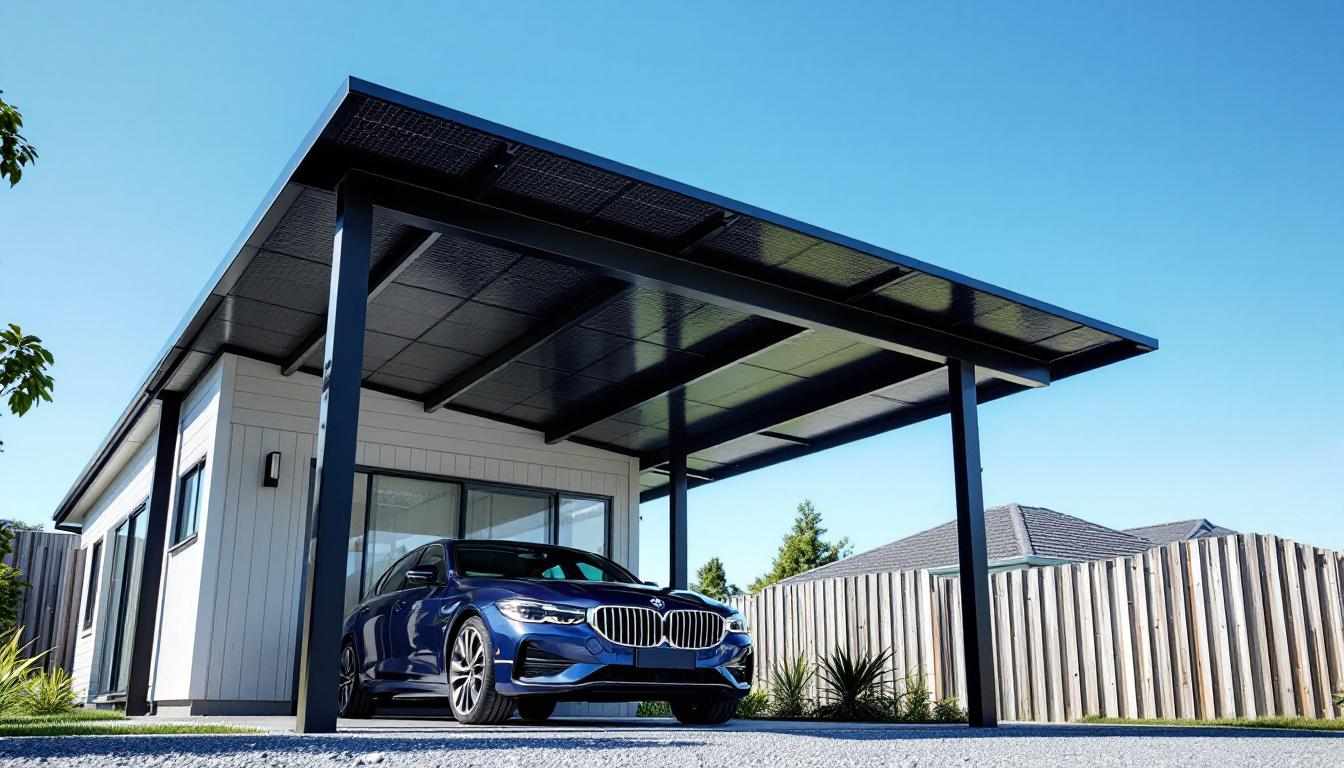
The roof is the obvious place to put solar panels, until it is not. Limited north facing area, fragile tile, a planned re roof in the next 5 years, or simply not enough panels to cover a high consumption home: any one of those pushes a serious solar buyer to the next obvious surface, the driveway or backyard.
A solar carport or solar pergola turns space you already use for parking or outdoor living into a working generation surface. For NZ homes that need more power than the roof alone can deliver, or for businesses with car parks that bake in the Auckland sun all day, the maths often beats a second roof retrofit.
This guide covers what a solar carport or pergola actually costs in NZ in 2026, the design options that work in NZ wind and rain, the council consent path, and how Apollo Energy designs each structure from the site up instead of bolting panels onto an off the shelf frame.
Considering a solar carport or pergola for your home or business? Book a free design visit with Apollo Energy and we will measure the site, model the production, and quote a structure built specifically for your space.
Why a solar carport or pergola makes sense in NZ
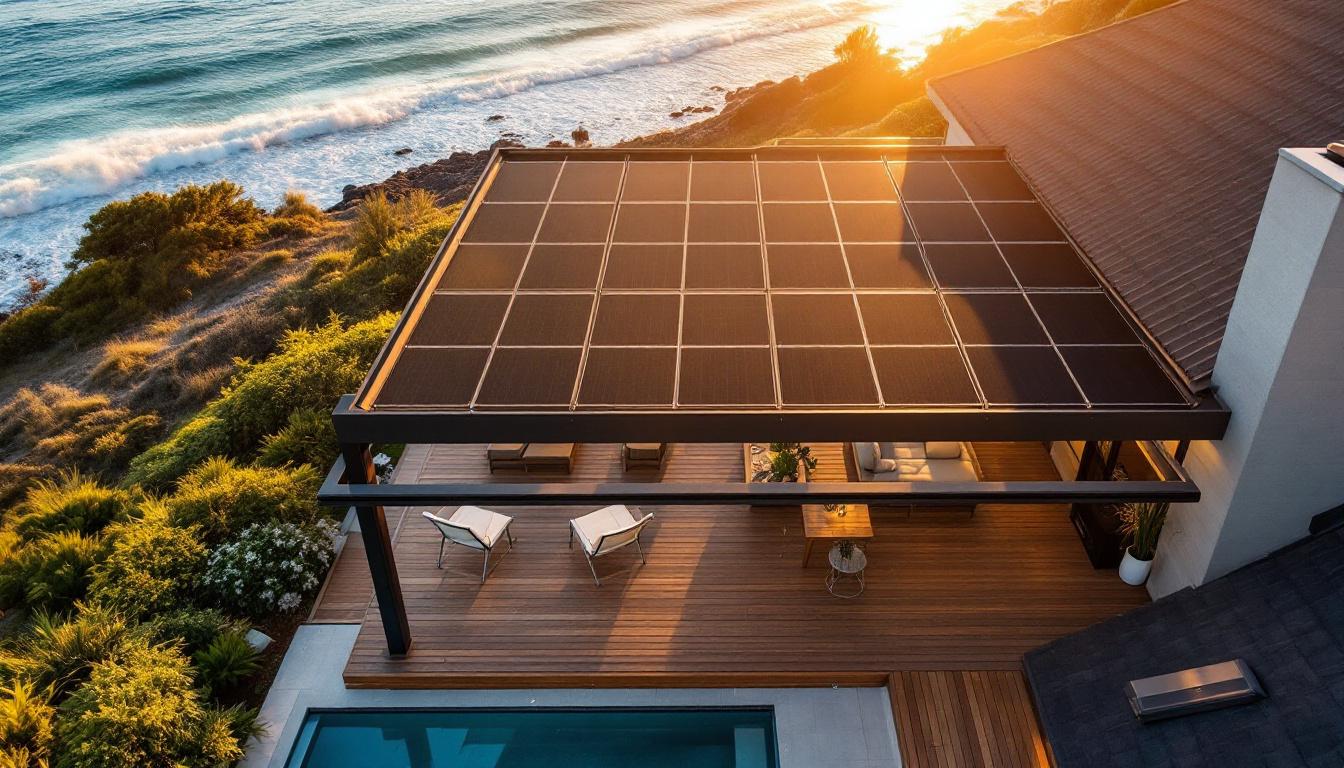
Three situations push NZ homeowners and businesses past roof solar and toward a ground structure:
- Not enough roof area. A 6.6 kW system needs roughly 33 square metres of unshaded panel area. Townhouses, older bungalows with hipped roofs, and homes split across two orientations often cap out at 4 or 5 kW from the roof alone.
- Wrong roof aspect. A north facing carport over a south facing driveway can outproduce a 6 kW south facing roof array by 40 percent or more across a year.
- Planned re roof. Installing roof solar 2 to 4 years before a planned re roof creates a costly removal and reinstall job later. A carport or pergola sidesteps that timing problem entirely.
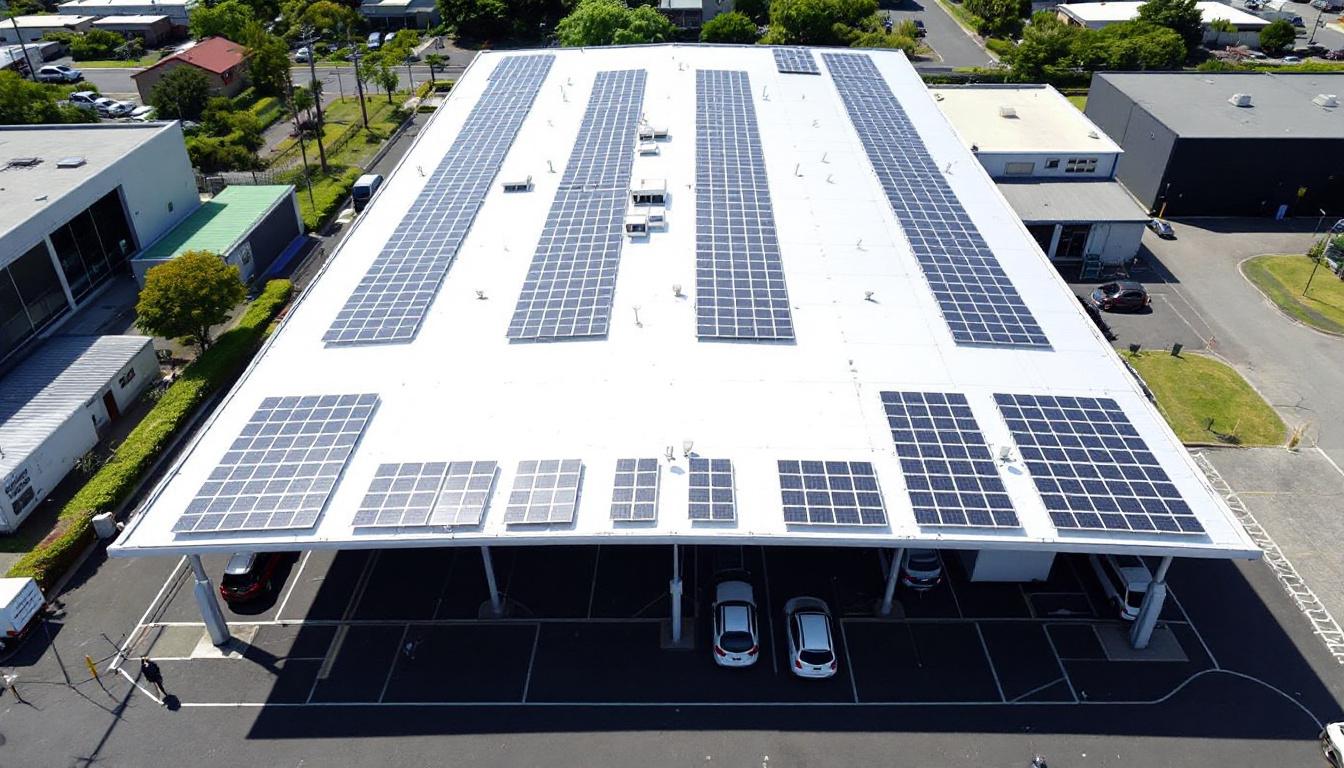
For commercial premises the calculus is different. A flat car park sized for 20 to 100 vehicles is generation real estate the business already pays to maintain. Adding a solar canopy generates power, protects vehicles from hail and UV, and increasingly serves as an EV charging hub.
Takeaway:
- Roof is not always the best surface; carports and pergolas can outperform the roof on production per dollar.
- The driveway or backyard often has better aspect than the actual roof.
- Commercial car parks are the highest leverage retrofit application in NZ today.
Solar carport vs solar pergola: which one fits your site
The terms are often used interchangeably, but in design they differ.
- Solar carport. A purpose built parking structure with solar panels as the roof. Usually freestanding, post and beam, sized to one or two vehicles, with a working roof that sheds water and protects the car from sun and weather.
- Solar pergola. An outdoor living structure (over a deck, patio or pool) where the panels form a partial or full canopy. Lighter framing, more design choice on tilt, sometimes glass panels for partial daylight transmission.
The decision usually comes down to what the space is used for, not how many kilowatts you want. A driveway needs vehicle clearance, water shedding and a structure that can handle wind uplift. A backyard pergola is judged on aesthetics, deck integration, and how much filtered light it casts on the patio underneath.
Takeaway:
- Carport = vehicle protection plus generation; pergola = outdoor living plus generation.
- Both can be standalone or attached to the house.
- Apollo can deliver either with the same panel and inverter stack; the structural design is what changes.
The cost of a solar carport or pergola in NZ (2026)
Costs vary widely with size, structural complexity, ground conditions, and whether the panels are framed or frameless. The 2026 ranges below are typical fully installed (panels plus structure plus inverter plus install), GST included, for an Auckland install:
| Structure size | Panel kW | Typical NZD installed |
|---|---|---|
| Single car carport (1 vehicle, 3 by 6 m) | 3 to 4 kW | 14,000 to 19,000 |
| Double car carport (2 vehicles, 6 by 6 m) | 6 to 8 kW | 22,000 to 30,000 |
| Backyard pergola (4 by 4 m, attached) | 4 to 6 kW | 18,000 to 25,000 |
| Large pool pergola (6 by 8 m, freestanding) | 8 to 12 kW | 28,000 to 40,000 |
| Commercial canopy (10 cars, 6 by 25 m) | 30 to 40 kW | 95,000 to 145,000 |
The single largest cost driver is structural steel and foundation work, not the panels. A carport built for cyclone tested loads in Northland will cost 20 to 30 percent more than the same structure in inland Canterbury. Ground conditions matter too; a soft clay site needs deeper piling and adds NZD 2,000 to 4,000 to most residential builds.
For a benchmark on what kW size you actually need, see our breakdown of 5kW vs 10kW residential solar systems; the same sizing maths applies whether the panels sit on the roof or on a carport.
Takeaway:
- Residential single car carports sit around NZD 14,000 to 19,000 fully installed.
- Double car or pergola structures land NZD 22,000 to 40,000 depending on size.
- Structure cost beats panel cost; site conditions move the price significantly.
Cost breakdown component by component
Breaking down a typical NZD 25,000 double car solar carport build in Auckland:
| Component | Typical NZD (incl GST) |
|---|---|
| Tier 1 solar panels (6 to 8 kW) | 4,200 to 5,500 |
| Hybrid inverter (single phase) | 2,200 to 3,000 |
| Steel frame, posts and beams | 5,500 to 7,500 |
| Foundation work (piles or concrete pads) | 2,000 to 3,500 |
| Roof membrane, flashing, gutter integration | 1,500 to 2,500 |
| Installation labour (structural + electrical) | 4,500 to 6,500 |
| Compliance, commissioning, lines company application | 1,000 to 1,400 |
| Total typical | 22,000 to 30,000 |
Steel and structural labour together account for roughly 50 percent of the build cost. This is why commodity "carport kits" sold online with no structural engineering rarely make sense in NZ wind zones; the frame is the most important load bearing decision in the project.
Takeaway:
- Panels are about 20 percent of total cost; the frame and install are the majority.
- Cheap online "kit" carports often skip the engineering required for NZ wind loading.
- Foundation cost varies sharply with ground type; a soils check before quoting is standard.
Have a driveway or courtyard in mind? Book a free site visit and we will measure the space, model the production and quote a structure designed for it.
How much will you actually save
The savings maths is the same as a roof system, with one bonus: the carport or pergola usually faces optimal solar aspect because it can be tilted and oriented freely, while a roof has to take whatever pitch the house was built with.
An Auckland 8 kW carport facing true north at 25 degrees should produce roughly 11,500 to 12,500 kWh per year. At 35 cents per kWh retail rate and 45 percent self consumption, the annual saving is around NZD 2,800. Add 12 cent per kWh export credit on the remaining 55 percent, and the total year one return is approximately NZD 3,400.
At a NZD 26,000 installed cost, payback lands around year 7 to 8, with another 17 to 18 years of pure positive return ahead. Our deep dive on 10 year solar savings for an NZ household walks through the same maths in detail, including how to model export credits and rate inflation.
Takeaway:
- An 8 kW north facing carport typically saves NZD 3,000 to 3,500 in year 1 for an Auckland home.
- Payback lands 7 to 8 years for residential, 4 to 6 years for commercial scale.
- Carports often outperform roof equivalents because tilt and aspect are designable, not given.
Five common design pitfalls we see in NZ
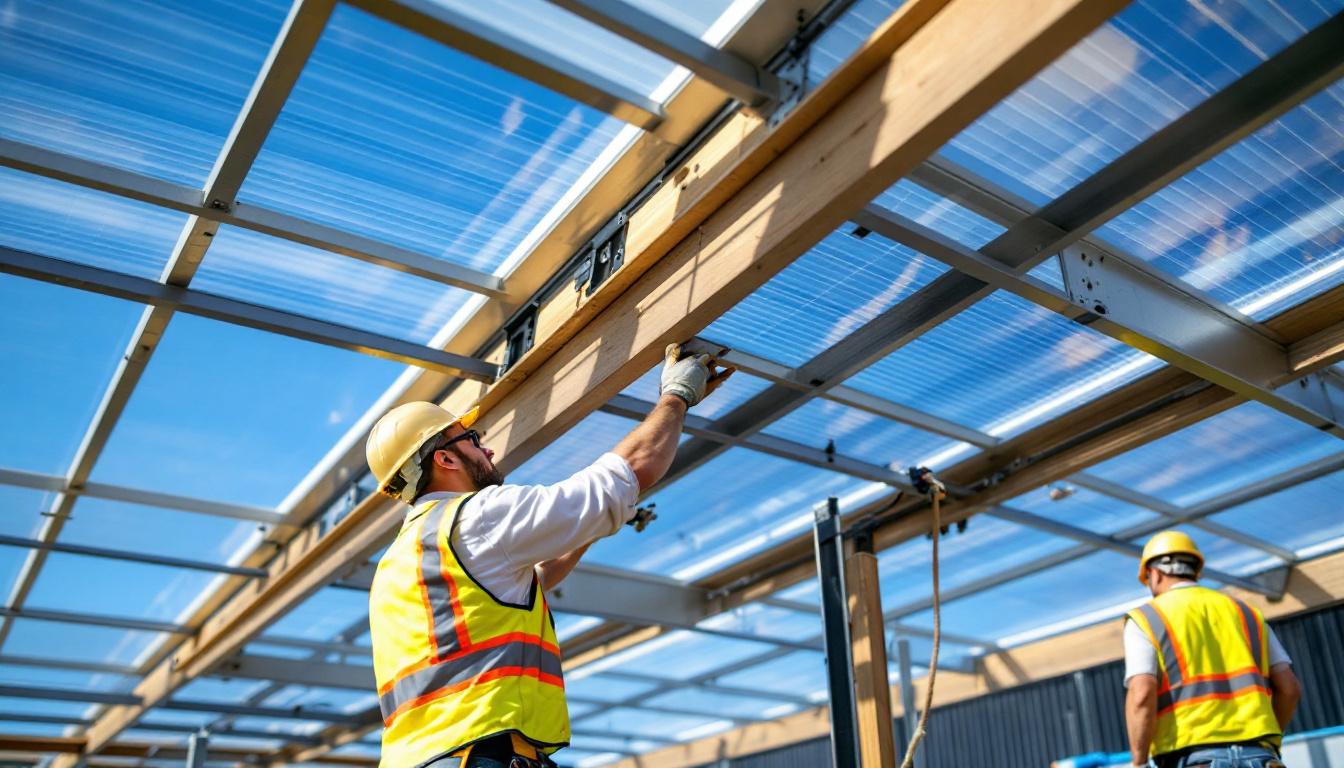
- Undersized footings. Wind uplift on a panel canopy is significant. We have inspected residential carports where rusting brackets were the only thing keeping the structure attached to the slab. Engineered footings are not optional.
- Wrong tilt for the panel type. Frameless bifacial panels generate from both sides, but only if the structure has enough underside clearance. Mounting bifacial panels flush against a back panel kills the bonus production they were chosen for.
- Bolted on after the fact. Adding panels to an existing carport built without a solar load in mind often means re sizing the entire frame. It is usually cheaper to demolish and rebuild than to retrofit.
- No water management. A solar roof still needs gutters, downpipes and water shedding designed in. Panels that pool water at the low edge create algae bloom and reduce production within 18 months.
- Aesthetic afterthought. Carports and especially pergolas live in everyday view. We have walked away from designs where the homeowner only realised at install time that the cabling and inverter sat in clear view of the kitchen window.
Takeaway:
- Structural engineering is the single biggest determinant of long term safety and durability.
- Water shedding, cable runs and inverter location all need designing in, not added later.
- The cheapest quote almost always cuts one of these corners.
Council consent and structural requirements
In NZ, a solar carport or pergola almost always requires building consent if it is a permanent structure or attached to the dwelling. The Building Act exempts some freestanding structures below 30 square metres and 3.5 m in height, but only if they are not used for habitable purposes and are at least 1 metre from any boundary.
In practice most solar carports built by Apollo go through full consent because:
- They carry significant wind load (panels are sails)
- They include electrical connection back to the house and grid
- They may sit within boundary setback distance, especially on suburban Auckland sections
Lines company approval is also required for any grid connected solar, regardless of where the panels sit. Apollo handles both the council consent paperwork and the lines company application as part of the design fee, so the homeowner is not chasing two parallel approvals.
Takeaway:
- Most NZ solar carports need full building consent due to wind load and electrical work.
- Boundary setback rules can shrink the available footprint on smaller sections.
- A reputable installer handles both council and lines company paperwork in house.
Why Apollo Energy designs every carport and pergola from scratch
Off the shelf carport kits do not exist for NZ wind zones and grid conditions in a way that is safe to install without engineering review. Every Apollo solar carport or pergola goes through the same engineering pipeline as our roof systems:
- Site visit including roof, ground and aspect survey, plus shading analysis from neighbouring trees and buildings.
- Load profile analysis from your last 12 months of power bills, so the kW size matches your actual usage.
- Structural design by our partner engineers for wind zone and ground type.
- Panel and inverter selection from our Tier 1 partner range (Trina Solar, Growatt). See our full solar panel options.
- Council consent application and lines company approval, lodged together.
- Install by our own licensed team across Auckland, North Shore and Christchurch (no subcontractors on the structural or electrical work).
- Commissioning against the production simulation, with monitoring portal handover.
Recent project examples are on our solar energy projects page, including carport canopies for residential clients on lifestyle blocks where roof area was limited.
Want a real quote and a real design for your driveway or backyard? Get a free site visit from Apollo Energy. We measure the space, model production against NZ irradiance data and quote a complete carport or pergola structure built specifically for your site.
Frequently asked questions
What size solar carport can I fit on a single car driveway?
A 3 by 6 m carport sized for a single mid size car typically fits 8 to 12 panels at 410 to 440 W each, giving roughly 3.3 to 5.3 kW of generation. That is enough to cover daytime base load for most households and put a meaningful dent in the power bill.
Can I run an EV charger from a solar carport directly?
Yes, and it is one of the most common reasons NZ homeowners choose a carport over additional roof panels. A properly sized 8 to 10 kW carport with a hybrid inverter and a 7 kW EV charger can fully charge a typical EV during daylight hours, with the carport doubling as the charging shelter.
Are solar pergolas weatherproof or do they leak in heavy rain?
Modern solar pergolas use sealed panel frames with integrated gutter channels, so the structure functions as a working roof. Apollo specifies pergolas with full perimeter flashing, downpipes connected to existing stormwater, and panel level water seals. Done correctly, a solar pergola is as weatherproof as a metal roof.
Do I need building consent for a solar carport in NZ?
Almost always yes. The Building Act exempts very small freestanding outdoor structures, but any carport that is attached to the house, sits inside boundary setback, or connects electrically back to the grid will need full building consent and a lines company application. Apollo handles both as standard.
How long does a solar carport take from quote to fully installed?
For a typical residential single or double carport, 8 to 12 weeks is normal. Roughly 2 to 3 weeks for design and consent application, 4 to 6 weeks for council review and material delivery, and 1 to 2 weeks for on site build and commissioning. Commercial canopies take 4 to 8 weeks longer due to engineering scale.
Is a solar carport cheaper than adding more panels to the roof?
Per kW installed, no; a carport is typically 25 to 40 percent more expensive than adding the same panel capacity to an existing roof, because of the structure cost. Where the roof has run out of usable area, has wrong aspect, or is due for replacement, the carport still wins on lifetime production and avoided re install cost.
Can the carport be added to an existing solar system?
Often yes, depending on inverter capacity and string design. If your existing inverter has spare capacity, the carport panels can be wired in as an additional string. If not, an additional inverter (or replacement with a larger hybrid) is part of the design. Apollo audits the existing system as the first step of any retrofit quote.
For a carport or pergola designed and priced for your own site, request a free quote or call Apollo Energy on 0800 288 333.