Add a Battery to an Existing Solar System NZ: AC vs DC Retrofit Compared
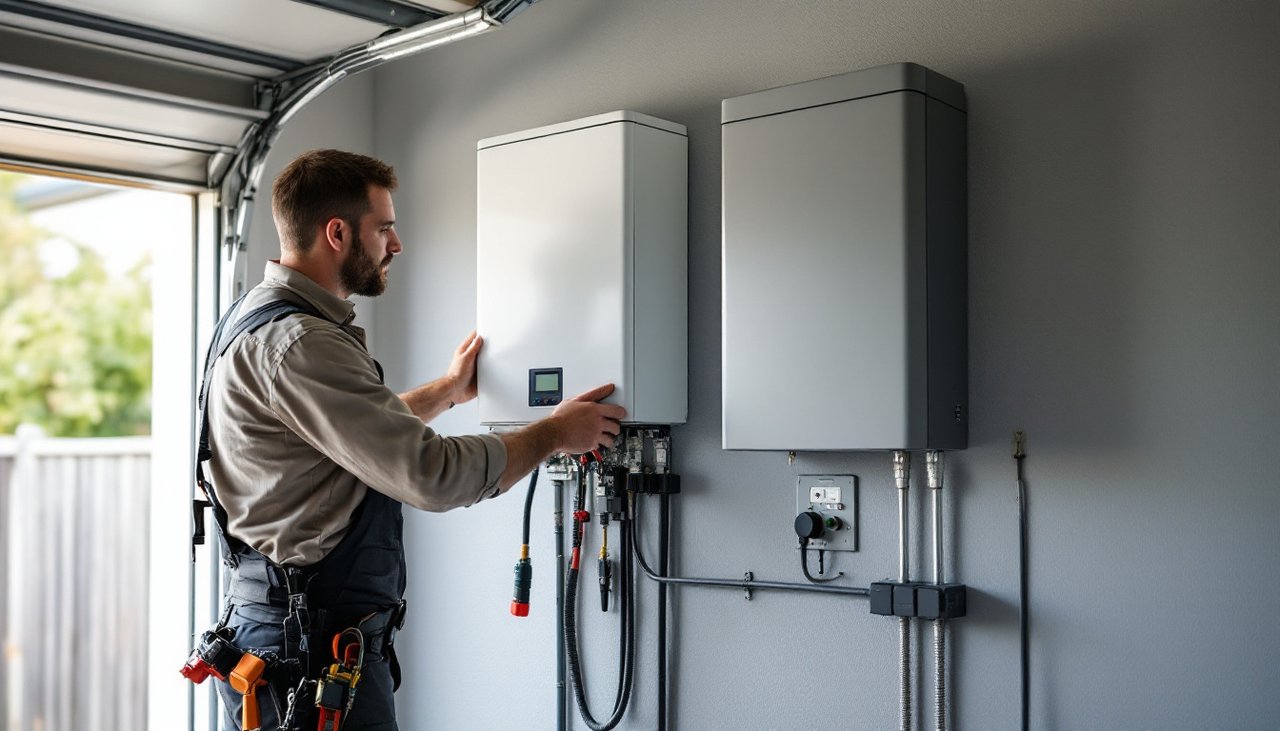
30 to 40%. That is roughly how much of its own solar output a typical New Zealand home uses when there is no battery on the system, based on the figures on our battery storage page. The rest is exported to the grid during the day at the retailer's buy-back rate, and the house buys power back after sunset at the full price. With a battery in the system, that self-consumption share can climb towards 80 to 90%.
If your panels are already on the roof, the question is no longer whether storage works. It is how to connect a battery to the equipment you already own, and which route makes sense for the age and type of that equipment. There are two retrofit routes, and they suit different systems. Below, they are compared side by side: what each involves, where each one gives ground, and how to tell which fits your home before you ask for a price.
Already have solar and wondering if it is battery ready? Request a retrofit assessment and include your inverter model and a recent power bill, or call 0800 288 333. Every sunny week without storage is another week of surplus sold back cheaply.
Battery Ready vs Not Yet: Checking Your Existing System First
Before comparing retrofit options, establish what you are starting with. Five details decide which routes are open to you, and most of them can be found on the inverter label, your original installation paperwork or your monitoring app.
| Check | What to look for | What it points towards |
|---|---|---|
| Inverter type | A standard string (grid-tie) inverter, or a hybrid inverter with a battery port | String: AC coupling or a hybrid swap. Hybrid: a DC battery may connect directly |
| Inverter age and warranty | Install date and how much warranty cover remains | Plenty of cover left favours keeping it; an ageing unit makes a hybrid swap worth costing |
| Switchboard space | Room for extra breakers, isolators and a separate backup circuit | A crowded board means allowing for board work in either option |
| Battery location | A ventilated, shaded wall away from bedrooms, often in the garage | Determines cable runs and, with them, install complexity |
| Evening usage | How much of your bill falls between late afternoon and morning | Low evening use weakens the case for any battery, whichever route you take |
Two regulatory points also shape the decision. Battery installations in New Zealand are designed to AS/NZS 5139, and inverter grid connection follows AS/NZS 4777. An older inverter may need its settings checked against current requirements as part of any retrofit. Your lines company also needs to know about the change: Vector across much of Auckland, Orion in Christchurch, and the relevant network elsewhere. Adding storage or changing inverter capacity typically means updating your distributed generation application, which a competent installer prepares for you.
If you want a neutral primer on how solar and storage work at home before going further, Gen Less, the government's energy efficiency programme, has a plain overview.
AC-Coupled vs DC-Coupled: The Two Ways to Add a Battery
Every battery retrofit falls into one of two architectures. The difference is where the battery joins the system, and that single detail drives most of the trade-offs that follow.
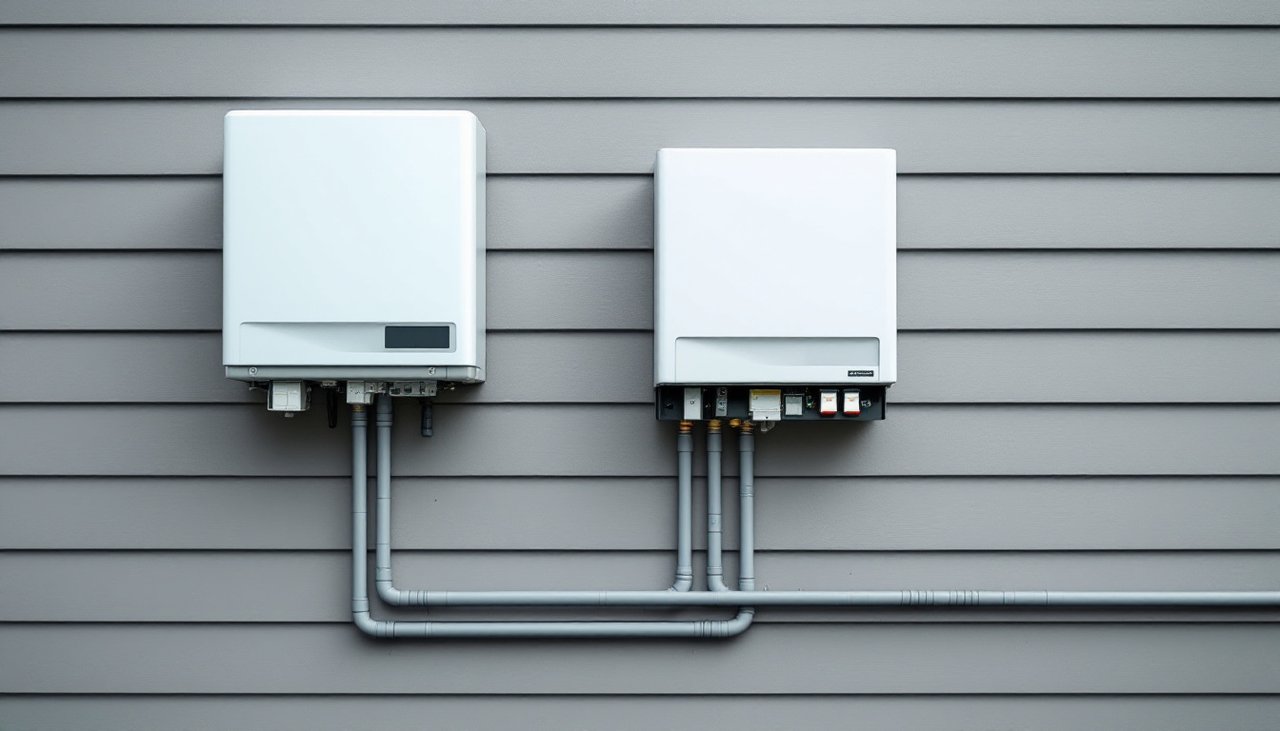
AC coupling leaves your existing solar inverter in place. The battery arrives with its own battery inverter, which connects on the AC side at your switchboard. Solar power is converted from DC to AC by your current inverter, then converted back to DC to charge the battery, then back to AC again when the house draws on it.
DC coupling replaces your existing inverter with a hybrid inverter. Panels and battery share that one inverter, so solar charges the battery on the DC side before any conversion to AC. Fewer conversion steps, one device managing the whole system.
| Factor | AC-coupled (keep your inverter) | DC-coupled (hybrid swap) |
|---|---|---|
| Existing inverter | Stays in place | Replaced by a hybrid inverter |
| Conversion steps, solar to battery | More (DC to AC to DC) | Fewer (DC to DC) |
| Hardware on the wall | Two inverters plus the battery | One inverter plus the battery |
| Monitoring | Often two apps unless brands match | One app covering panels and battery |
| Backup in a power cut | Depends on the battery inverter and how backup circuits are wired | Built around the hybrid inverter; recharging from solar during an outage depends on configuration |
| Disruption on install day | Lower; the solar side is untouched | Higher; inverter swap and recommissioning |
| Uses remaining inverter warranty | Yes | No; a new inverter warranty starts |
| Usual fit | Newer inverter with years of cover left | Older inverter, or a wish for one integrated system |
Neither column is better in every row. AC coupling protects the investment you have already made; DC coupling resets the system around a single, current inverter. Which one wins depends on the state of your existing hardware more than on the battery itself.
Option A: Keep Your Inverter and Add an AC-Coupled Battery
AC coupling is the least intrusive way to add storage. Your panels, roof wiring and solar inverter carry on exactly as before, and the battery system sits alongside them. For a home whose inverter was installed in the last few years and still has substantial warranty cover, this route avoids retiring a working component early.
The compromise is efficiency and complexity. Each conversion between DC and AC loses a little energy, and an AC-coupled system converts solar energy more times before it reaches the battery. You also end up with two inverters to maintain, and, unless the battery and solar brands match, two monitoring apps to check.
Where Option A gains ground
- Existing inverter and its warranty remain in service
- Solar side is untouched, so install day disruption is lower
- Works with most standard string inverters, subject to compatibility checks
Where Option A gives ground
- More conversion steps between panel and battery
- Two inverters on the wall and potentially two monitoring apps
- Backup behaviour depends heavily on the battery inverter chosen and how circuits are wired
Option B: Swap to a Hybrid Inverter for a DC-Coupled Battery
A hybrid swap replaces your existing inverter with one that manages panels and battery together. On the systems we install, that is a Growatt hybrid inverter, rated at up to 97.5% efficiency, backed by a 10-year warranty and monitored from your phone. Solar charges the battery directly on the DC side, and one app shows generation, storage and household use in a single view.
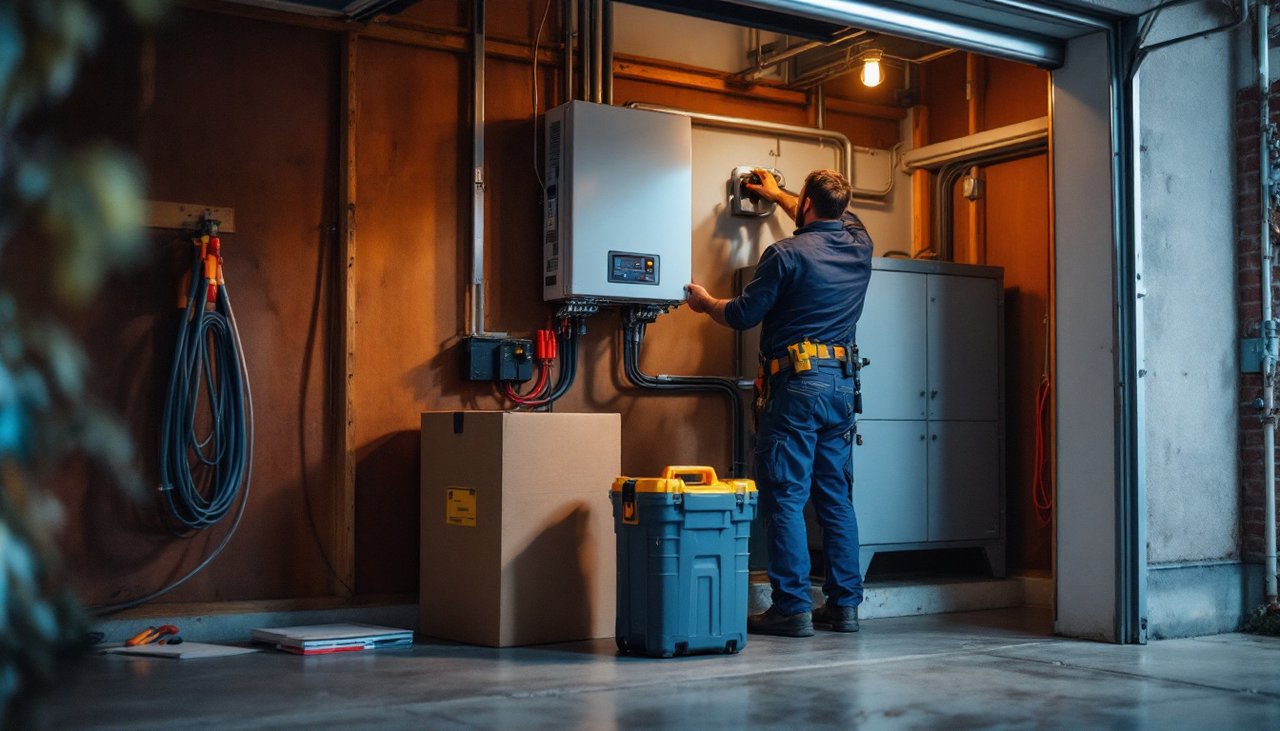
The trade-off is that you retire your current inverter. If it is young and well inside its warranty, that is value left on the table. If it is several years old, the calculation flips: inverters are typically the first major component in a solar system to need replacing, so swapping to a hybrid now combines two jobs (inverter renewal and battery installation) into one visit and one design.
A hybrid swap also gives the installer a chance to review the whole system: string configuration, isolators, earthing and settings. On older installations, that review alone can be worth having.
Where Option B gains ground
- Fewer conversion steps from panel to battery
- One inverter, one warranty and one monitoring app
- Battery capacity can usually be expanded within the hybrid inverter's supported range
Where Option B gives ground
- Existing inverter is retired, along with any remaining warranty
- More work on install day, including recommissioning the solar side
- Network paperwork may need updating for the new inverter as well as the battery
Retrofit Steps Side by Side: Option A vs Option B
Both routes follow the same broad sequence. The differences sit in the design and install stages.
| Step | Option A: AC-coupled | Option B: DC-coupled hybrid swap |
|---|---|---|
| 1. Assessment | Inverter model, age, switchboard, evening usage and battery location reviewed | Same review, plus a check of panel strings against the hybrid inverter's input range |
| 2. Design | Battery and battery inverter matched to your existing solar inverter | Hybrid inverter and battery designed as one system around your existing panels |
| 3. Network application | Lines company notified of the added storage | Lines company notified of the new inverter and the storage |
| 4. Install | Battery and battery inverter mounted and wired to the switchboard; solar side untouched | Old inverter removed, hybrid inverter and battery mounted, solar strings reconnected |
| 5. Backup circuits | Essential loads moved to a backup circuit if backup is included | Same, using the hybrid inverter's backup output |
| 6. Commissioning | Battery tested alongside the existing solar inverter | Whole system tested and commissioned as one |
| 7. Handover | Battery monitoring set up; solar monitoring continues as before | One monitoring app set up for panels and battery |
Capacity is decided at the design step in both options. Battery options commonly start around 5 kWh for light evening use, with 10 kWh suiting many average homes and 15 kWh or more for larger households. Our solar battery storage page sets out those capacity tiers, and the battery storage buying guide goes deeper on sizing and battery types. This article stays focused on connecting storage to a system that already exists.
Retrofit Now vs Wait for a Failure: The Cost of Holding Off
Waiting looks free, but it is not neutral. Two costs build while you hold off.
The first is exported surplus. Summer is when New Zealand rooftop systems produce the most, and it is also when the gap between what you generate and what you use during the day is widest. Without storage, that midday surplus goes to the grid at the buy-back rate, and the evening load is bought back at retail. A battery in place before the high-output months has the whole season to work; one installed in autumn misses most of it.
The second is unplanned replacement. If your inverter is ageing, the risk of waiting is that it fails first. A failed inverter tends to be replaced quickly with whatever is available, often a like-for-like string unit, which closes off the simpler DC-coupled path or forces a second job later. Planning the retrofit before that happens lets you choose the architecture rather than have it chosen for you.
Network applications also take time to process, so starting the assessment early keeps the paperwork from becoming the bottleneck.
AC or DC: Which Retrofit Suits Your Home?
Use your answers from the compatibility checks to place your home in one of these columns.

| Your situation | Route that usually fits |
|---|---|
| Inverter installed recently with years of warranty left; you want minimal disruption | Option A: AC-coupled battery |
| Inverter several years old or out of warranty; you want one system and one app | Option B: hybrid swap with DC-coupled battery |
| You already have a hybrid inverter with a battery port | Add a compatible battery directly, no inverter change needed |
| Most of your use happens in daylight, with little evening load | Neither yet; the battery case is weak until evening use rises |
| You plan to add panels or an EV charger soon | Option B, so the new inverter is sized for the larger system from the start |
If your home sits between two rows, the deciding factor is usually inverter age. A young inverter tips the balance towards keeping it; an older one tips it towards the hybrid swap. An Apollo assessment checks your inverter model, switchboard and usage pattern against both options and recommends one route, with the reasoning written down so you can compare it against any other quote.
Summer output is building now. Book your retrofit assessment before the high-output months so your battery has the full season to work, or call 0800 288 333 to talk through your existing system with our team in Auckland or Christchurch.
Frequently Asked Questions About Adding a Battery to Existing Solar
Can I add a battery to any existing solar system?
Most grid-tied systems can take a battery through either AC coupling or a hybrid inverter swap. The inverter type, its age, switchboard space and your evening usage decide which route is practical. An on-site assessment confirms compatibility before any design work.
Do I need to replace my inverter to add a battery?
Not necessarily. An AC-coupled battery works alongside a standard string inverter and leaves it in place. Replacing the inverter with a hybrid is usually worth considering when the existing unit is older or out of warranty.
Will a retrofitted battery give me backup power in a power cut?
It can, if the battery system supports backup and essential circuits are wired to a backup output. Backup is a design choice rather than an automatic feature, so confirm it is included in the quote.
Do I need approval from my lines company to add a battery?
Adding storage or changing your inverter typically means updating your distributed generation application with your lines company, such as Vector in much of Auckland or Orion in Christchurch. Your installer normally prepares and submits this for you.