Compare Solar Quotes NZ: 8 Steps to a Clear, Like-for-Like Decision

$8,000 to $18,000. That is the typical installed range for a home solar system in New Zealand, and the number at the bottom of a quote tells you very little about where a fair price sits inside it. Two quotes can look close and buy very different systems. Two can look far apart and be nearly identical once you line up the size, hardware, warranties and extras.
This checklist turns a pile of solar quotes into a like-for-like decision. Work through the eight steps in order with your quotes in front of you, then use the final section for the questions that usually come up before signing. It takes an evening, and it applies whether you are in Auckland, Christchurch or anywhere in between.
Still collecting quotes? You can request a written Apollo quote and run it through the same steps as the others.
1. Give Every Installer the Same Brief
Quotes only compare cleanly when they answer the same question. If one installer hears "cut my bill" and another hears "add a battery later", you will get two different systems and no fair way to rank them.
Write your brief on one page and send it to everyone. Include your average monthly power bill, your last 12 months of usage if your retailer can supply it, your roof type, and when people are home during the day. Add anything planned in the next few years, such as an EV, a heat pump or a battery.
Action: send the same one-page brief to every installer, and ask each to quote the same core option plus any alternative they recommend.
- Same brief in, comparable quotes out.
- Twelve months of usage beats a single winter bill.
- Future plans such as an EV or battery affect the design now.
2. Request Written, Itemised Quotes
A single total is not something you can compare. The EECA residential solar purchasing checklist advises getting a written quote that clearly states what is included and what is not, and it is a useful independent reference to keep beside your own notes.
Look for the items that most often sit outside a headline price: scaffolding, cabling, switchboard work, any distribution upgrade and an import/export meter. A quote that stays silent on one of these has not told you it is free. It has told you nothing.
Action: mark each quote against that list. Where an item is missing, email the installer and ask whether it is included, and get the reply in writing.
- Written and itemised, or it does not count.
- Silence on an extra is not the same as included.
- Keep every clarification by email so it stays with the quote.
3. Check the Design Fits Your Roof and Your Usage
Solar is a design job before it is a hardware purchase. A quote should show that someone has looked at your actual roof: which faces carry the panels, how many sit on each, and what shading was allowed for. A quote written from a satellite image and a bill estimate is a starting point, not a design.

Ask how the layout was decided. North-facing roofs are ideal, but east and west faces can suit a household that uses more power in the morning or late afternoon. Our roof suitability guide covers what to look for if you are unsure how your roof stacks up.
Then check the design against your usage. A home without a battery typically uses about 30% to 40% of its own solar power, so a system sized only on total yearly usage can export more than you expect. A household that is out from nine to five needs that factored in.
Action: ask each installer for a panel layout showing roof faces and panel counts, and ask whether a site visit was part of the design.
- A layout drawing shows real design work.
- Check how shading and roof direction were handled.
- Compare the design against when you actually use power.
4. Compare Panels and Inverters by Model
Brand names are not enough. Each quote should name the exact panel model, the exact inverter model and the quantity of each. That lets you check the data sheets yourself and stops a substitution later.
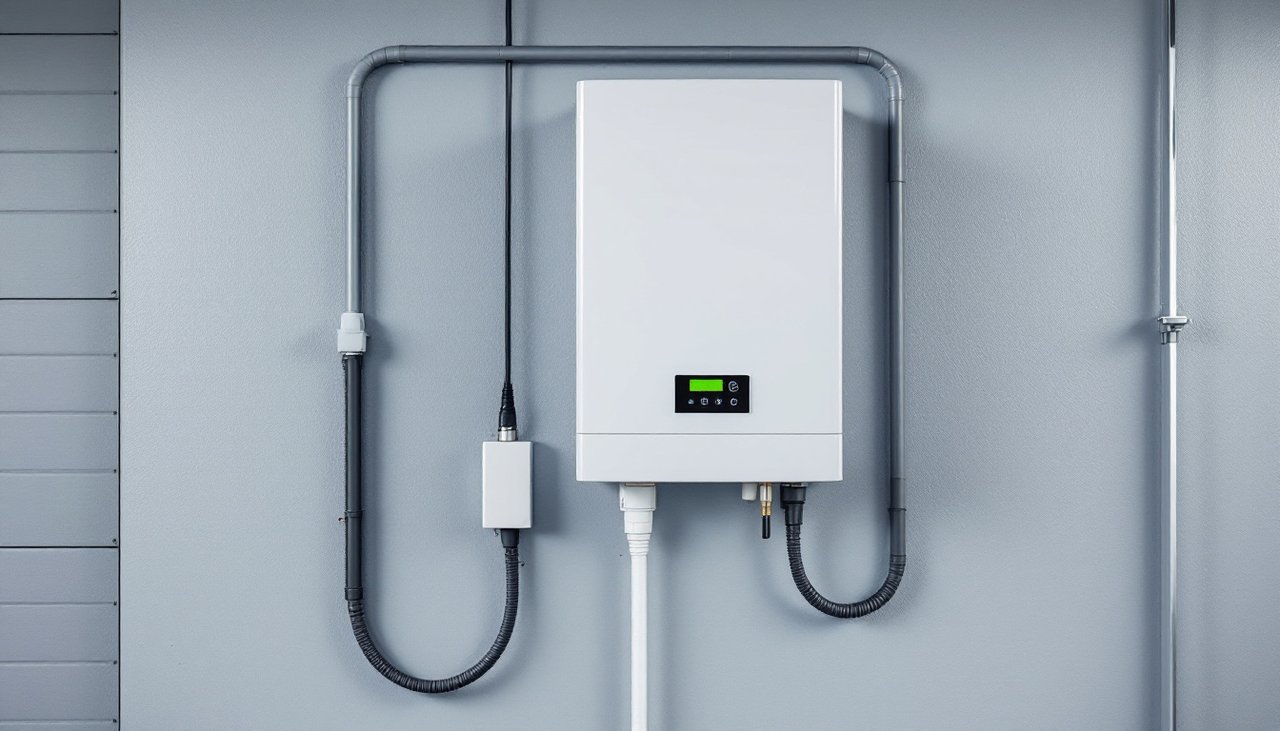
For panels, compare the wattage, module efficiency and warranties. Use the module efficiency on each data sheet, because cell efficiency is not comparable between brands. That applies to our own figure too: the up to 22.5% we list for Trina Solar panels is maximum cell efficiency, so read the module figure from the data sheet for the model quoted. For inverters, compare type, conversion efficiency, monitoring and warranty. As a reference point, our Growatt inverters reach up to 97.5% efficiency with phone monitoring included.
Pay close attention to inverter type. A string inverter suits a solar-only system. A hybrid inverter makes the system battery ready. You do not always need one to add a battery later, but a string inverter setup usually needs a separate battery inverter or extra retrofit cost. If you might add storage in the next few years, a cheaper quote built on a string inverter may cost more in the long run, so ask each installer to price their quote against your battery plan.
Action: write down the panel model, panel count, total kW and inverter model from each quote, then ask any installer who has not named a model to do so.
- Exact model numbers, not just brand names.
- Check that total kW matches panel count times panel wattage.
- Battery plans make the inverter type a key line.
5. Work Out the Price per kW
Two systems of different sizes cannot be compared on total price. Divide each quote's installed price by its total kW and you have a fairer number.
Here is a simple reference. A typical 6.6kW system costs about $10,000 to $14,000 installed, which works out at roughly $1,500 to $2,100 per kW. The price per kW usually falls as a system grows, so expect a larger system to sit lower on that scale, before a battery or three phase work is added.
Use the result to ask better questions, not to pick a winner. A quote well above the others should show you why, perhaps through a premium panel model, a harder roof or switchboard work. A quote well below them should show you what was left out. Our solar panel price breakdown lists what belongs in an installed price and what moves it up or down.
Action: calculate price per kW for each quote, and only compare once the extras from Step 2 are added back in.
- Price per kW makes different sizes comparable.
- About $1,500 to $2,100 per kW is a guide for 6.6kW, not a rule.
- Treat an unusually low figure as a prompt to check inclusions.
6. Test the Output, Savings and Payback Figures
Every quote estimates what the system will produce and save. These figures are forecasts, and the assumptions behind them matter as much as the result.
Start with yearly output. Our typical Auckland figure for a 6.6kW system is about 8,600 kWh a year, which is roughly 1,300 kWh for each kW installed. Your own number depends on location, roof direction and shading, but a figure far above that deserves an explanation.
Then look at savings. Apollo's own estimate for a typical 6.6kW system is savings from about $2,000 a year and payback in about 4 to 6 years. Your result depends on how much of your solar power you use at home and what you pay for power, so hold our figure to the same test as any other. A quote showing much faster payback may be assuming you use nearly all your own solar power, or that power prices keep climbing at a steady rate.
Ask what export rate, how much self-use and what future power price each forecast assumes. The answers often explain most of the gap between two savings figures.
Action: ask every installer for their forecast assumptions in writing, then compare them side by side before you compare the dollar figures.
- Compare kWh per kW across all quotes.
- Note the export rate and power price each forecast assumes.
- Treat every savings figure as a direction, not a guarantee.
7. Line Up the Warranties Side by Side
A solar system carries several warranties, and they run for very different lengths. Compare each one separately rather than accepting a single big number.
List the panel product warranty, the panel performance warranty, the inverter warranty, the battery warranty if you have one, and the installer's own workmanship cover. A product warranty covers faults in the panel itself, while a performance warranty covers how much output the panel keeps over time. For reference, our Trina panels are listed with a 25-year product and performance warranty, with a 30-year performance warranty on the premium Vertex S+ DE09R. Our Growatt inverters carry a 10-year warranty, which can be extended to 15 or 20 years. Since quality inverters typically last 15 to 20 years or more, one replacement over a long ownership period is a realistic thing to plan for.
Then ask who actually handles a claim. A long warranty is worth less if the installer will not manage it for you or has no local presence when something fails.
Action: add a warranty line for each component to your notes, and ask each installer who you call first if a part fails in year eight.
- Compare panel product and performance warranty years separately.
- Price an extended inverter warranty as its own line.
- Find out who manages a claim, not just who issued the warranty.
8. Confirm Who Handles Consent, Connection and Support
The paperwork is part of what you are buying. Before you sign, find out exactly who does what, because each of these steps can add time if nobody owns it.
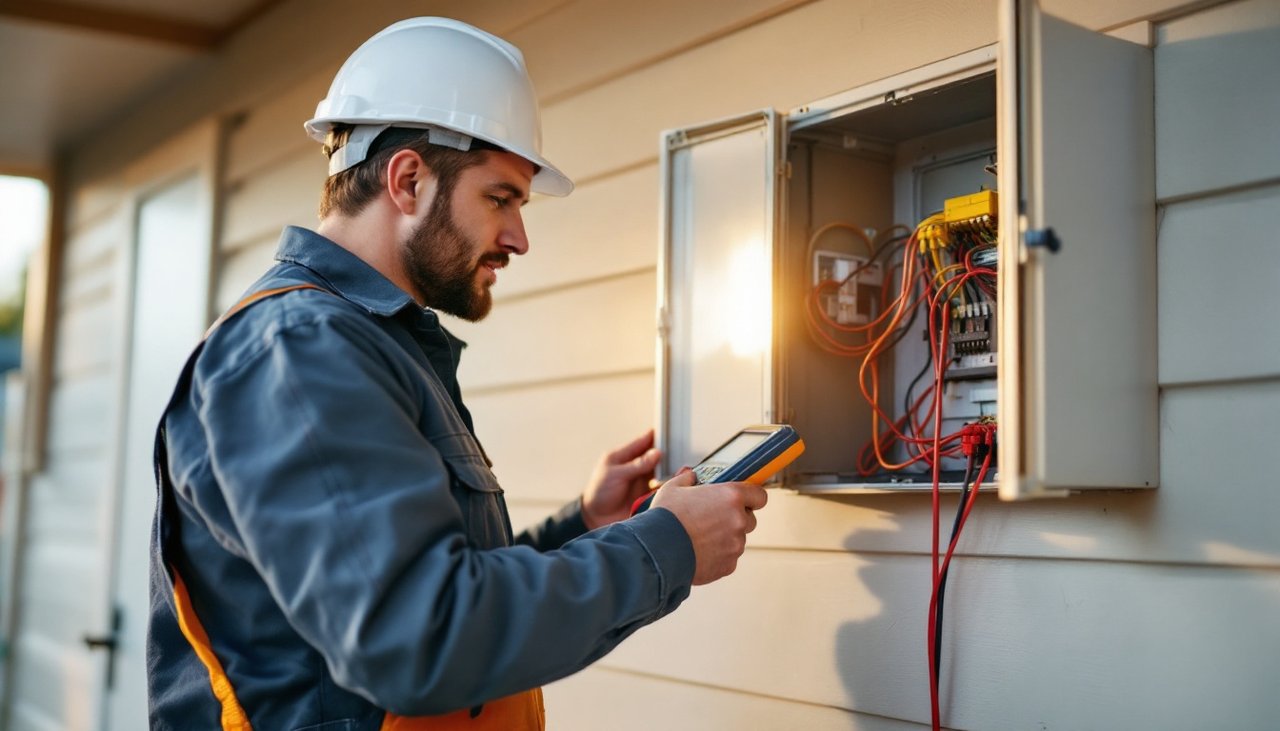
Start with consent. Since 23 October 2025, roof-mounted arrays under 40 square metres in wind zones up to high can generally be installed without a building consent, provided they meet the Building Code and your district plan. Larger arrays and higher wind zones have extra conditions, so ask how your installer has treated your property.
Next is the grid connection. Your local lines company, such as Vector across much of Auckland or Orion in Christchurch, needs to approve the connection, and the EECA purchasing checklist notes that the installer usually handles this. Ask too whether your mains cable and switchboard can cope with exporting power, and whether you need a smart or import/export meter.
Finally, look at what happens after installation. Ask how long the work will take, what electrical certification you will receive, whether monitoring is set up at handover, and who looks after servicing. For reference, our crews typically complete a home install in 1 to 2 days, and our price includes WiFi monitoring and a handover walkthrough.
Action: ask each installer to confirm in writing who handles consent, lines company approval, retailer connection, certification and aftercare.
- Consent is often not required, but it depends on the array and site.
- The lines company must approve the connection.
- Get handover, monitoring and servicing written into the quote.
Clear Up Common Questions Before You Sign
Use these answers to close out anything your notes have left open.
How many solar quotes should I get?
Three is a practical number for most households. It gives you enough to spot an outlier without creating more paperwork than you can compare properly. Send all three installers the same brief.
Should I just choose the cheapest solar quote?
Not on price alone. Compare price per kW after adding back any extras, then weigh up hardware, design and warranties. A low quote can be good value, but only once you know what it includes.
Is a quote without a site visit reliable?
It is useful as an early estimate, but it should not be your final price. Roof condition, shading, access and switchboard work are hard to judge remotely, and each one can change the cost. Ask for a site check before you commit.
What should I check before accepting a solar quote?
Confirm the exact models, total kW, itemised inclusions, warranty terms and who handles consent and lines company approval. Check the forecast assumptions as well. Then make sure all of it appears in the document you sign.
Whichever quote you choose, sign only once every answer sits in the written document.
If it would help to have a second pair of eyes on your numbers, our team is happy to talk through what you have so far, with no pressure to go further. Call Apollo on 0800 288 333 when you are ready.