Solar Panel Roof Requirements in NZ: A 2026 Suitability Guide
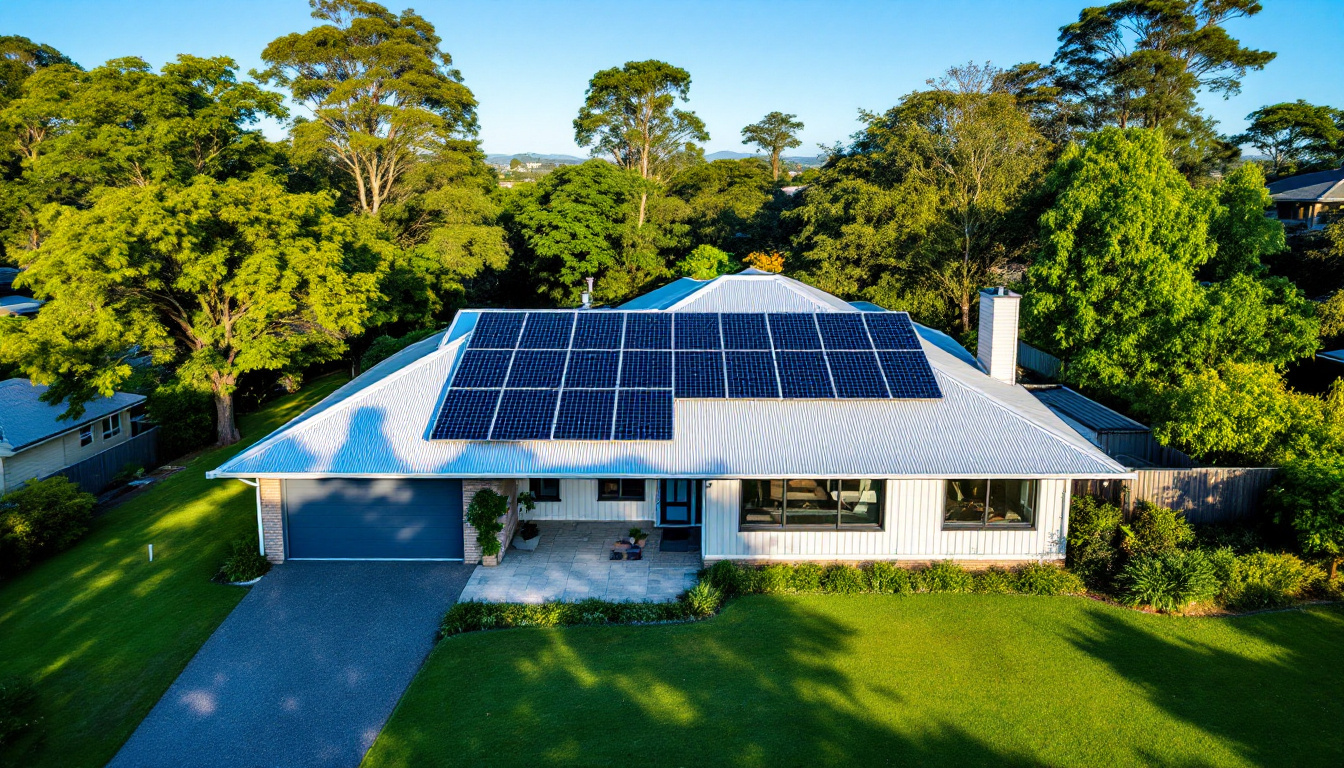
Most people start planning solar by asking how many panels they need. The more useful first question is whether the roof can carry them well. Pitch, direction, cladding material, shading and remaining roof life all change how much a system produces and how it has to be mounted. A roof that suits solar can make a modest system perform well. A roof with the wrong orientation or heavy afternoon shade can hold back a large one.
This guide walks through what gets checked on a New Zealand roof before a system is designed, in the order an installer usually works through it.
What gets assessed on your roof
A roof assessment is not one measurement. It is a short list of factors that interact, and the design responds to all of them together.
- Orientation decides how much of the day your panels face the sun
- Pitch affects seasonal output and how panels are mounted
- Material and structure decide the mounting method and fixings
- Shading can cost more output than any other single factor
- Usable area sets the ceiling on system size
- Roof age and condition decide whether to install now or after re-roofing
None of these rule a roof out on their own. They change what the sensible design looks like.
Orientation: which way your roof faces
New Zealand sits in the southern hemisphere, so north-facing roof planes receive the most sun across the day and through the year. A north-facing pitch is the straightforward case.
East and west facing planes still work. They shift production toward morning and afternoon rather than concentrating it around midday. For a household that uses most of its power before work and after dinner, that shift can suit the daily usage pattern better than a midday peak that gets exported.
South-facing planes receive the least direct sun and are normally the last choice. On many homes the practical answer is to split an array across two planes rather than force everything onto one.
The amount of roof you have available in each direction is also what determines how many panels your household needs, because a split array uses space differently from a single run.
- North-facing gives the most consistent all-day output
- East and west shift production to morning and evening
- Splitting across two planes is common and often sensible
Pitch and roof angle
Most New Zealand houses have a pitched roof somewhere in the range that works reasonably well for solar, so pitch is rarely the deciding factor. It matters more at the extremes.
A shallower pitch flattens the difference between summer and winter output and collects more dust and debris, so rain washes the glass less effectively. A steeper pitch sheds water and debris more readily and holds up better in winter when the sun sits lower.
Flat and very low-pitch roofs are workable, but they are mounted differently. Panels sit on a tilt frame that lifts them to a working angle, which uses more roof area per panel because the rows have to be spaced so they do not shade each other. Trina has panel lines specifically optimised for flat-roof mounting and others optimised for pitched roofs, which is part of why panel selection follows the roof survey rather than preceding it.
- Most pitched NZ roofs fall in a workable range
- Flat roofs need tilt frames and more space per panel
- Very shallow pitches rely less on rain to stay clean
Roof material and how panels are fixed
The cladding decides the mounting hardware, not whether solar is possible.
Long-run and corrugated steel is the most common residential roof in New Zealand and the most straightforward to work with. Brackets clamp or fix to the ribs, and the number of penetrations is usually low.
Concrete and clay tiles need tile hooks. A tile is lifted, a hook is fixed to the batten or rafter below, and the tile goes back over it. It takes longer than steel and occasionally a cracked tile needs replacing during the work, which is normal and worth raising before the job starts.
Membrane and torch-on roofs, typical on flat sections, are usually handled with ballasted or non-penetrating frames so the waterproof layer stays intact.
Older asbestos-cement or fragile sheeting is the one case that genuinely changes the plan. It is usually addressed as part of a re-roof rather than drilled into.
Panel choice follows from this. Compact panels fit more awkward roof shapes, higher efficiency panels get more from a small area, and larger-format panels suit big uninterrupted commercial rooftops. You can see how these differ across the Trina Solar panel range.
- Steel roofs are the quickest and most common case
- Tile roofs use hooks and take longer to install
- Flat membrane roofs usually avoid penetrations entirely
Not sure how your own roof scores on orientation, pitch and shading? Ask for a free roof assessment and we will check the whole roof, not just the sunniest face, before we quote a system size.
Shading, and why it costs more than people expect
Shading is the factor most often underestimated. A chimney, a vent, a neighbouring two-storey extension or a single mature tree can take a meaningful bite out of daily production, and the loss is not proportional to the shaded area. Depending on how panels are wired and whether optimisers or microinverters are used, shade across part of one panel can drag down more than that panel alone.
Shade also moves. A survey looks at where shadows fall through the day and across the seasons, not just at the moment someone is standing on the roof. Trees grow, which is why planting near the array is worth thinking about before it happens rather than after.
This is a common cause of an existing system that is underperforming when the hardware itself is healthy.
Worth separating from shading: panels generate from daylight, not direct sun. Apollo Energy's own figures put overcast-day production at roughly 25 to 40 percent of rated capacity, and New Zealand's UV levels are high. An overcast climate is not the same problem as a shaded roof.
- Partial shade can cost more output than its area suggests
- Shadows must be assessed across the day and the seasons
- Cloud cover reduces output; it does not stop it
Roof age and condition
This one is simple to state and easy to get wrong. Tier 1 panels like Trina are designed to last 30 years or more, and come with a 25-year performance warranty guaranteeing at least 80 percent of original output, with degradation running around 0.4 to 0.55 percent per year.
If the roof underneath has ten years left, the panels will outlive it. Removing and refitting an array to re-roof later is an avoidable cost. Where a roof is near the end of its life, re-roofing first and installing after is usually the cheaper path overall.
A structural check also happens here. Panels and mounting add load, and older or lightly-framed roofs occasionally need attention before an array goes on.
During a residential solar installation, the assessment visit covers the roof, the switchboard, and your actual power usage, and the system design follows from all three. Apollo Energy also handles council paperwork, electrical certification and retailer connection, and most residential installations in New Zealand do not require resource consent.
- Panels outlast a roof that is near end of life
- Re-roof first if the cladding has under about ten years left
- Structural capacity is checked alongside the roof surface
Frequently asked questions
How are solar panels attached to a roof?
Panels sit on rails, and the rails fix to the roof structure with brackets suited to the cladding. Steel roofs use clamps or bracket fixings to the ribs. Tile roofs use hooks that fix to the batten or rafter under a lifted tile. Flat roofs commonly use ballasted or tilt frames that avoid penetrating the membrane.
What roof angle is ideal for solar panels in New Zealand?
Most pitched New Zealand roofs sit in a workable range, so the angle is rarely what decides a design. Steeper pitches favour winter output and stay cleaner; shallower pitches even out the seasons but collect more debris. Flat roofs are lifted to a working angle on tilt frames.
Can solar panels be installed on a tile roof?
Yes. Tile roofs are a standard case and use tile hooks rather than direct clamps. Expect a longer install than on steel, and expect the occasional cracked tile to be replaced during the work.
Will solar panels cause a roof leak?
A correctly flashed installation should not. Penetrations are sealed and flashed as part of the mounting method, and flat membrane roofs are usually done without penetrations at all. Leaks are a workmanship issue rather than an inherent consequence of mounting panels, which is why the fixing method and who carries out the work matter.
How do you clean solar panels on a roof?
In most New Zealand conditions rain does the majority of the work, particularly on steeper pitches. Where cleaning is needed, it is done with water and a soft brush from ground level where possible. Shallow-pitch and flat arrays collect more and need attention more often. Walking on an array to clean it is not advisable.
Getting your roof assessed
Every roof is different, and the honest answer to whether yours suits solar comes from looking at it rather than from a general guide. Apollo Energy visits the property, assesses the roof, reviews your power usage and recommends a system size on that basis. For general background on home solar in New Zealand, EECA's Gen Less is a useful independent starting point.
If you want to know what your roof can carry, you can book a free roof assessment or call 0800 288 333.