What Does 10 Years of Solar Actually Save a NZ Household? (2026 Real Numbers)
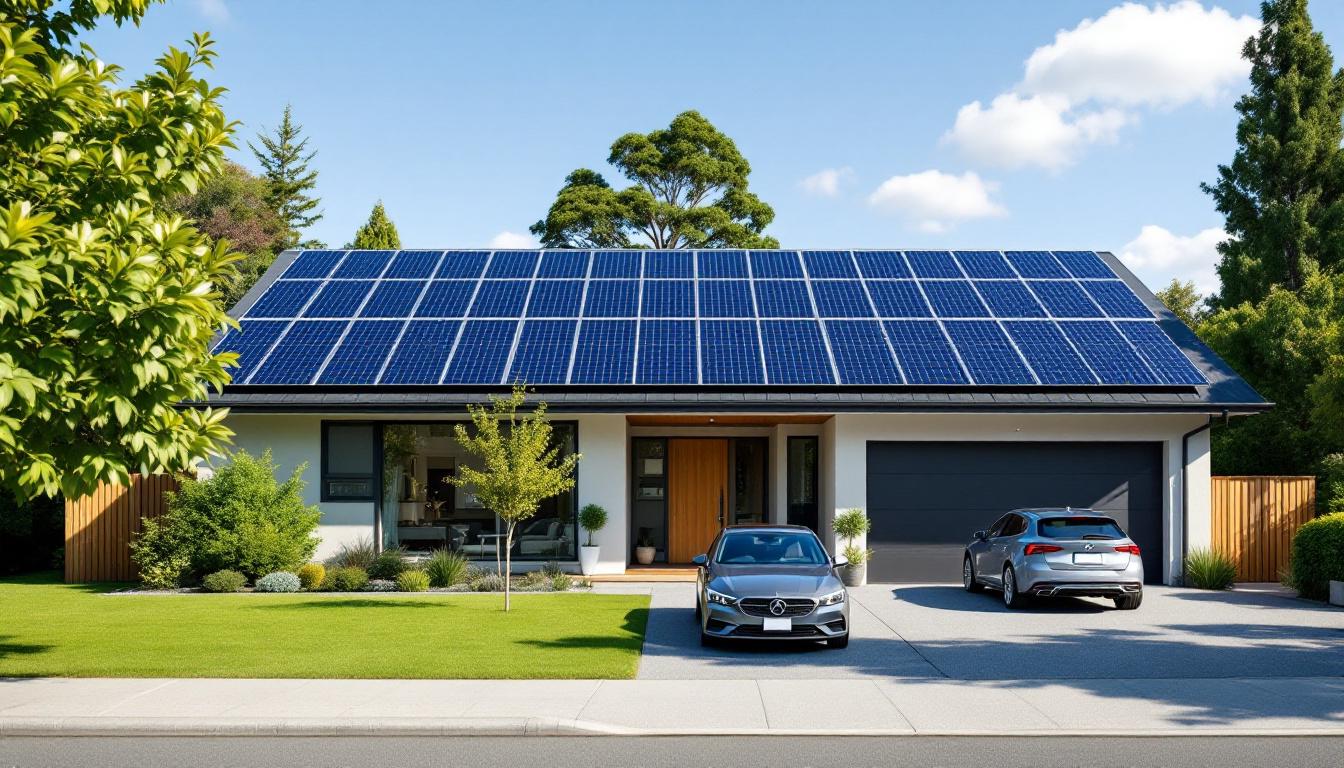
A typical Auckland household with a 6.6kW solar system saves between NZD 20,000 and NZD 25,000 on power over 10 years. After the upfront cost is paid off, with no rise in power prices beyond historical NZ averages, and without a battery. Add a battery and a solar friendly retail plan, and the number climbs above NZD 38,000.
That is the short answer. Below is how the maths actually works, what changes the number most, and three real NZ scenarios you can compare against your own household.
Want your own 10 year savings estimate?Get a free solar quote from Apollo Energy with your actual power usage, and we will model the numbers specific to your home.
The starting numbers for a typical NZ household
Average NZ residential power use in 2026 sits at 7,500 to 8,500 kWh per year. For a family of four with a heat pump and no EV, annual consumption is closer to 9,000 to 11,000 kWh. Retail rates vary by region and plan, but the 2026 national average lands near 32 to 38 cents per kWh, with daily fixed charges on top.
A 6.6kW solar system (the most common residential size in NZ) installed on a well oriented roof in Auckland produces 8,800 to 9,500 kWh per year.
Here is what that means for a household that uses every kWh the system produces:
| Metric | Value |
|---|---|
| System size | 6.6kW |
| Annual production | 9,000 kWh (midpoint) |
| Retail rate (2026 average) | 35 c/kWh |
| Annual bill saving (100 percent self consumption) | NZD 3,150 |
| Install cost (typical, incl GST) | NZD 13,500 to 16,000 |
If you could use every kWh you produced, your system pays itself off in 4.5 to 5 years. But no home uses 100 percent. Most households self consume 30 to 55 percent, and the rest is exported to the grid. That is where export credits and batteries change the maths.
Takeaway: 6.6kW is the standard NZ residential size for a reason. Annual bill saving scales with your self consumption rate. Install cost has dropped 30 percent over the last decade.
Year by year savings: 6.6kW system, Auckland home, no battery
This is the most common real world scenario. The household self consumes 40 percent of production directly (fridge, heat pump, dishwasher, pool pump, daytime laundry) and exports the remaining 60 percent at a typical 12 c/kWh buyback rate.
| Year | Bill saving | Export credit | Total annual | Cumulative |
|---|---|---|---|---|
| 1 | NZD 1,260 | NZD 648 | NZD 1,908 | NZD 1,908 |
| 2 | NZD 1,285 | NZD 661 | NZD 1,946 | NZD 3,854 |
| 3 | NZD 1,310 | NZD 674 | NZD 1,984 | NZD 5,838 |
| 4 | NZD 1,337 | NZD 687 | NZD 2,024 | NZD 7,862 |
| 5 | NZD 1,363 | NZD 701 | NZD 2,064 | NZD 9,926 |
| 6 | NZD 1,391 | NZD 715 | NZD 2,106 | NZD 12,032 |
| 7 | NZD 1,418 | NZD 729 | NZD 2,147 | NZD 14,179 |
| 8 | NZD 1,447 | NZD 744 | NZD 2,191 | NZD 16,370 |
| 9 | NZD 1,476 | NZD 758 | NZD 2,234 | NZD 18,604 |
| 10 | NZD 1,505 | NZD 774 | NZD 2,279 | NZD 20,883 |
At a NZD 14,500 install cost, this household pays off the system in year 7, then banks roughly NZD 6,400 of pure saving across years 8, 9 and 10, with another 15 plus years of productive life ahead.
The numbers assume a 2 percent annual rate increase (the 10 year historical average for NZ retail electricity) and account for 0.5 percent annual panel degradation.
Takeaway: payback is 6 to 8 years for most Auckland homes without a battery. Every cent of rate inflation increases long term saving. Year 11 onward is almost pure upside; the system is paid off but still producing.
What changes the 10 year total (up or down)
Four variables shift the number most.
1. Self consumption rate
Every kWh you use yourself saves 35 cents. Every kWh you export saves 12 cents. Pushing self consumption from 40 percent to 60 percent adds roughly NZD 4,500 to the 10 year total.
Practical moves: run dishwasher and laundry between 10am and 3pm, heat water during the day, delay EV charging until sunrise if you have spare solar capacity.
2. Power rate trajectory
If NZ retail rates rise 4 percent a year (above historical average, but not unusual post 2022), add roughly NZD 3,000 to the 10 year figure. If rates stay flat, subtract about NZD 2,500.
3. Export buyback rate
Buyback rates vary from 8 c to 18 c per kWh depending on retailer and plan. Every 2 cents of buyback rate difference shifts the 10 year number by about NZD 1,000. Switching to a solar friendly plan is the single cheapest optimisation available. Our buy back and sell back overview shows the retailers offering the best rates in 2026.
4. Adding a battery
A 10kWh battery shifts 3 to 5 kWh of daily production from export to self consumption, at a value gain of roughly 23 cents per kWh. Over 10 years that is an extra NZD 8,400 to NZD 14,000 in saving, minus the battery cost. See options on our solar battery page.
For a deeper walkthrough on how a battery actually shifts the saving curve, see our guide on solar battery storage in NZ for 2026.
Takeaway: self consumption is the highest leverage variable you control. Your retail plan matters nearly as much as your system size. Batteries pay back fastest on high self consumption homes.
Want the 10 year maths run on your own bills? Request a free savings estimate and we will model it against your usage, your roof and your retailer instead of a national average.
Three NZ scenarios compared
Numbers below use the same 2 percent rate increase and 0.5 percent panel degradation assumptions as above, across a full 10 year window.
Scenario A: Modest Auckland home, 5kW system, no battery
- System cost: NZD 11,500
- Annual production: 6,800 kWh
- Self consumption: 35 percent
- Export rate: 12 c/kWh
- 10 year total saving: NZD 16,400
- Payback: year 7 to 8
Our guide on how much power a 5kW solar system produces in NZ walks through what to expect from this size in real Auckland conditions.
Scenario B: Family of four, 10kW system, with 10kWh battery
- System cost: NZD 26,500 (panels + battery combined)
- Annual production: 13,500 kWh
- Self consumption: 65 percent (battery shifts evening load)
- Export rate: 12 c/kWh
- 10 year total saving: NZD 38,200
- Payback: year 7 to 8
- Extra benefit: blackout backup power
Scenario C: Larger home, 13kW system, no battery, solar friendly plan
- System cost: NZD 22,000
- Annual production: 17,000 kWh
- Self consumption: 45 percent
- Export rate: 16 c/kWh (Flick or similar)
- 10 year total saving: NZD 34,500
- Payback: year 6 to 7
Across all three, the pattern is the same: upfront cost is recovered in the first third of the system's life, and the remaining 15 plus years deliver net positive return. For commercial buildings (warehouses, dairies, workshops) the same maths runs faster, with payback dropping to four to six years; see our commercial solar costs and ROI guide for the full breakdown.
If you are still comparing residential sizes, our home solar systems page walks through sizing with NZ specific production data. If you are weighing whether solar is worth it in your situation at all, start at why go solar.
Takeaway: payback lands in years 6 to 8 across most residential scenarios. Batteries improve lifetime saving without changing payback much. A better retail plan is sometimes worth more than more panels.
Upfront cost meets lifetime value
The hardest part of the solar conversation is not the 10 year number. It is the cheque you write in month one. Here is how the outlay breaks down for a standard 6.6kW installation:
| Component | Typical cost (NZD) |
|---|---|
| Tier 1 panels | 4,200 to 5,500 |
| Hybrid inverter | 2,200 to 3,200 |
| Mounting, rails, cabling | 1,500 to 2,000 |
| Installation labour | 2,800 to 3,500 |
| Compliance, commissioning, monitoring | 800 to 1,100 |
| Total | 11,500 to 15,300 |
Finance options (green loans, zero interest terms, energy provider plans) let many households spread the cost, and in some structures the monthly repayment is lower than the pre solar power bill. From month one, cashflow can actually improve.
Want the exact numbers for your home?Request a tailored 10 year savings report and we will run the maths on your roof, your power bills and your preferred retailer.
Frequently asked questions
How much does a typical NZ home save with solar in 10 years?
Most Auckland homes with a 6.6kW system save NZD 20,000 to NZD 25,000 over 10 years without a battery, and NZD 30,000 to NZD 40,000 with a battery and a solar friendly retail plan. The exact number depends on self consumption rate, roof orientation, and export buyback rate.
How long does a solar system take to pay itself off in NZ?
Six to eight years is typical for a well sized residential system in Auckland. Payback is faster for households with high daytime usage, north facing roofs, and a solar friendly retail plan. Larger commercial systems often pay back in four to six years.
Do NZ power prices actually keep rising?
Yes, historically. The 10 year average retail price increase is around 2 percent per year, with faster rises in some periods (2021 to 2023) and flatter years in others. Solar savings grow in value every time rates go up.
Is it worth adding a battery to an existing solar system?
If your current self consumption rate is below 50 percent, a battery usually adds NZD 8,000 to NZD 14,000 in lifetime saving after its own cost. For households below 30 percent self consumption, battery payback can be as fast as four to five years.
Does solar still save money if my roof is not north facing?
Yes, though less. East and west facing arrays produce 85 to 90 percent of what a north facing array would produce. Combined east and west (split arrays) spread production through the day, which can actually lift self consumption.
What happens after the 10 year mark?
Most tier 1 panels carry 25 year performance warranties. Inverter replacement is typically needed around year 12 to 15 at NZD 2,500 to NZD 3,500. Everything beyond that is pure ongoing saving on an asset you already own.
For a savings model built on your own power bills, request a free quote or call Apollo Energy on 0800 288 333.